

IMPORTANT: Do not use your browsers back button to go back to a question. This will leave the test in progress. Good Luck!
For printing tests
Test-summary
0 of 92 questions completed
Questions:
- 1
- 2
- 3
- 4
- 5
- 6
- 7
- 8
- 9
- 10
- 11
- 12
- 13
- 14
- 15
- 16
- 17
- 18
- 19
- 20
- 21
- 22
- 23
- 24
- 25
- 26
- 27
- 28
- 29
- 30
- 31
- 32
- 33
- 34
- 35
- 36
- 37
- 38
- 39
- 40
- 41
- 42
- 43
- 44
- 45
- 46
- 47
- 48
- 49
- 50
- 51
- 52
- 53
- 54
- 55
- 56
- 57
- 58
- 59
- 60
- 61
- 62
- 63
- 64
- 65
- 66
- 67
- 68
- 69
- 70
- 71
- 72
- 73
- 74
- 75
- 76
- 77
- 78
- 79
- 80
- 81
- 82
- 83
- 84
- 85
- 86
- 87
- 88
- 89
- 90
- 91
- 92
Information
Printing tests master
You have already completed the quiz before. Hence you can not start it again.
Test is loading...
You must sign in or sign up to start the quiz.
You have to finish following quiz, to start this quiz:
Results
0 of 92 questions answered correctly
Your time:
Time has elapsed
You have reached 0 of 0 points, (0)
Categories
- Automatic Transmission/Transaxle 0%
- Battery and Starting System Diagnosis and Repair 0%
- Body Electrical Systems Diagnosis and Repair 0%
- Brakes 0%
- Charging System Diagnosis and Repair 0%
- Computerized Powertrain Controls Diagnosis 0%
- Electrical 0%
- Emission Control Systems Diagnosis 0%
- Emissions Systems Diagnosis 0%
- Engine Systems 0%
- Exhaust System Fabrication 0%
- Exhaust System Inspection and Repair 0%
- Exhaust System Installation 0%
- Exhaust System Repair Regulations 0%
- Fuel Systems and Air Induction Systems 0%
- General Electrical/Electronic System Diagnosis 0%
- General Powertrain Diagnosis 0%
- Heating and Air Conditioning 0%
- Heating, Ventilation, A/C (HVAC) and Engine Cooling System Service, Diagnosis, and Repair 0%
- I/M Failure Diagnosis 0%
- Ignition System Diagnosis 0%
- Instrument Cluster and Driver Information Systems Diagnosis and Repair 0%
- Lighting Systems Diagnosis and Repair 0%
- Manual Drive Train and Axles 0%
- Operating Systems and Related Controls Diagnosis and Repair 0%
- Refrigeration System Component Diagnosis and Repair 0%
- Suspension and Steering 0%
- 1
- 2
- 3
- 4
- 5
- 6
- 7
- 8
- 9
- 10
- 11
- 12
- 13
- 14
- 15
- 16
- 17
- 18
- 19
- 20
- 21
- 22
- 23
- 24
- 25
- 26
- 27
- 28
- 29
- 30
- 31
- 32
- 33
- 34
- 35
- 36
- 37
- 38
- 39
- 40
- 41
- 42
- 43
- 44
- 45
- 46
- 47
- 48
- 49
- 50
- 51
- 52
- 53
- 54
- 55
- 56
- 57
- 58
- 59
- 60
- 61
- 62
- 63
- 64
- 65
- 66
- 67
- 68
- 69
- 70
- 71
- 72
- 73
- 74
- 75
- 76
- 77
- 78
- 79
- 80
- 81
- 82
- 83
- 84
- 85
- 86
- 87
- 88
- 89
- 90
- 91
- 92
- Answered
- Review
-
Question 1 of 92
1. Question
Category: Heating, Ventilation, A/C (HVAC) and Engine Cooling System Service, Diagnosis, and RepairA lack of cooling is being diagnosed. A Technician discovers that the high-pressure line is hot to the touch on both sides of the orifice tube. Technician A says that is normal operation for an orifice tube system. Technician B says that the orifice tube may be clogged. Which Technician is correct?
CorrectThe correct answer is D. Neither Technician is correct. Technician A is not correct because the line after the orifice tube should be cool indicating that the refrigerant has passed through a restriction and is expanding. The temperature also gets cooler as the refrigerant absorbs heat to change states from a liquid to a gas. Technician B is not correct because a clogged or partially clogged orifice tube would stop the flow of refrigerant causing the tube to be hot only on one side of the orifice tube. Answers A, B, and C are not correct because neither Technician is correct.
IncorrectThe correct answer is D. Neither Technician is correct. Technician A is not correct because the line after the orifice tube should be cool indicating that the refrigerant has passed through a restriction and is expanding. The temperature also gets cooler as the refrigerant absorbs heat to change states from a liquid to a gas. Technician B is not correct because a clogged or partially clogged orifice tube would stop the flow of refrigerant causing the tube to be hot only on one side of the orifice tube. Answers A, B, and C are not correct because neither Technician is correct.
-
Question 2 of 92
2. Question
Category: Heating, Ventilation, A/C (HVAC) and Engine Cooling System Service, Diagnosis, and RepairFrost is observed on the line between the condenser and the receiver/drier. Technician A says that this is normal if the air conditioning were being operated on a hot and humid day. Technician B says that a restriction in the line or at the outlet of the condenser could be the cause. Which Technician is correct?
CorrectThe correct answer is B. Technician B only is correct because frost indicates that the component is cold and this can be caused if a restriction forces the high-pressure gas from the condenser to expand, thereby dropping the pressure and the temperature of the refrigerant as it flows through the restricted areas. Technician A is not correct because even though hot humid weather can contribute to frost formation, it is not normal for the section between the condenser and the receiver/drier to be cold. This section of the system should be warm because the refrigerant is a high-pressure liquid in this section. Answers C and D are not correct because Technician B only is correct.
IncorrectThe correct answer is B. Technician B only is correct because frost indicates that the component is cold and this can be caused if a restriction forces the high-pressure gas from the condenser to expand, thereby dropping the pressure and the temperature of the refrigerant as it flows through the restricted areas. Technician A is not correct because even though hot humid weather can contribute to frost formation, it is not normal for the section between the condenser and the receiver/drier to be cold. This section of the system should be warm because the refrigerant is a high-pressure liquid in this section. Answers C and D are not correct because Technician B only is correct.
-
Question 3 of 92
3. Question
Category: Heating, Ventilation, A/C (HVAC) and Engine Cooling System Service, Diagnosis, and Repair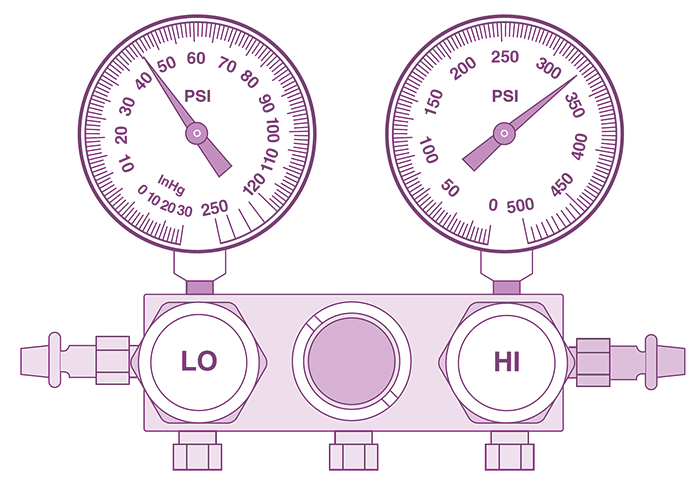
The discharge air temperature is warm or slightly cool. The pressure gauges shown represent which most likely cause?
CorrectThe correct answer is D. A clogged condenser coil or other obstruction that causes a lack of airflow through the condenser is the most likely cause of the warm discharge air temperature and the higher than normal pressures. Answer A is not correct because even though a system that is low on refrigerant will reduce cooling, the pressures would be lower, rather than higher than normal. Answer B is not correct because a defective compressor would cause the high-side pressure to be lower than normal, not higher than normal. Answer C is not correct because excess refrigerant would cause the discharge air temperature to be cool and a higher than normal low-side pressure and a normal high-side pressure rather than being above normal with a lack of cooling.
IncorrectThe correct answer is D. A clogged condenser coil or other obstruction that causes a lack of airflow through the condenser is the most likely cause of the warm discharge air temperature and the higher than normal pressures. Answer A is not correct because even though a system that is low on refrigerant will reduce cooling, the pressures would be lower, rather than higher than normal. Answer B is not correct because a defective compressor would cause the high-side pressure to be lower than normal, not higher than normal. Answer C is not correct because excess refrigerant would cause the discharge air temperature to be cool and a higher than normal low-side pressure and a normal high-side pressure rather than being above normal with a lack of cooling.
-
Question 4 of 92
4. Question
Category: Heating, Ventilation, A/C (HVAC) and Engine Cooling System Service, Diagnosis, and Repair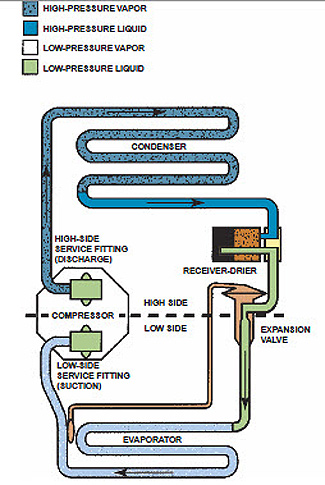
Technician A says that on an air conditioning system, the outlet temperature of the evaporator and the inlet temperature of the evaporator should be about the same if the system is fully charged. Technician B says that the outlet temperature will be colder if the system is undercharged. Which Technician is correct?
CorrectThe correct answer is A. Technician A is correct because if the system is fully charged, the inlet of the evaporator, after the orifice tube, will be about the same temperature as the outlet of the evaporator. Technician B is not correct because the evaporator outlet temperature will be warmer than the evaporator inlet temperature if the system is low on refrigerant. Answers C and D are not correct because Technician A only is correct.
IncorrectThe correct answer is A. Technician A is correct because if the system is fully charged, the inlet of the evaporator, after the orifice tube, will be about the same temperature as the outlet of the evaporator. Technician B is not correct because the evaporator outlet temperature will be warmer than the evaporator inlet temperature if the system is low on refrigerant. Answers C and D are not correct because Technician A only is correct.
-
Question 5 of 92
5. Question
Category: Heating, Ventilation, A/C (HVAC) and Engine Cooling System Service, Diagnosis, and RepairAn automotive air conditioning system is being tested for a lack-of-cooling complaint. Both high and low pressures are higher than normal. Technician A says that the system is low on charge. Technician B says that the system is overcharged. Which Technician is correct?
CorrectThe correct answer is B. Technician B is correct because higher than normal pressures on both low-side and high-side gauges and warmer than normal vent discharge temperature is a symptom of air trapped in the system. Technician A is not correct because the pressure would be lower than normal, not higher than normal, if the system was low on refrigerant. Answers C and D are not correct because Technician B only is correct.
IncorrectThe correct answer is B. Technician B is correct because higher than normal pressures on both low-side and high-side gauges and warmer than normal vent discharge temperature is a symptom of air trapped in the system. Technician A is not correct because the pressure would be lower than normal, not higher than normal, if the system was low on refrigerant. Answers C and D are not correct because Technician B only is correct.
-
Question 6 of 92
6. Question
Category: Heating, Ventilation, A/C (HVAC) and Engine Cooling System Service, Diagnosis, and RepairThe high-side pressure is higher than normal. Technician A says that the compressor may be defective. Technician B says that the condenser may be clogged with leaves or other debris blocking the airflow. Which Technician is correct?
CorrectThe correct answer is B. Technician B is correct because a partially blocked condenser will prevent air from removing the heat and create higher than normal high-side pressure. Technician A is not correct because a defective compressor is most likely to cause lower-than-normal high-side pressure due to its inability to compress the high temperature vapor. Answers C and D are not correct because Technician B only is correct.
IncorrectThe correct answer is B. Technician B is correct because a partially blocked condenser will prevent air from removing the heat and create higher than normal high-side pressure. Technician A is not correct because a defective compressor is most likely to cause lower-than-normal high-side pressure due to its inability to compress the high temperature vapor. Answers C and D are not correct because Technician B only is correct.
-
Question 7 of 92
7. Question
Category: Heating, Ventilation, A/C (HVAC) and Engine Cooling System Service, Diagnosis, and RepairA customer complained of a clear liquid leaking from underneath the vehicle on the passenger side after driving for a short time with the air conditioning on. The problem only occurs when the air conditioner is operating. Technician A says that the evaporator may be leaking. Technician B says that this may be normal condensed water formed on the cold evaporator coil. Which Technician is correct?
CorrectThe correct answer is B. Technician B is correct because when hot humid air comes in contact with the cooler evaporator coils, the moisture condenses into liquid water. This water flows out of the bottom of the evaporator housing through a small hole or opening and drips onto the ground. Technician A is not correct because if the evaporator were leaking, the refrigerant would vaporize and disappear as soon as it escaped from the sealed refrigerant system. Answers C and D are not correct because Technician B only is correct.
IncorrectThe correct answer is B. Technician B is correct because when hot humid air comes in contact with the cooler evaporator coils, the moisture condenses into liquid water. This water flows out of the bottom of the evaporator housing through a small hole or opening and drips onto the ground. Technician A is not correct because if the evaporator were leaking, the refrigerant would vaporize and disappear as soon as it escaped from the sealed refrigerant system. Answers C and D are not correct because Technician B only is correct.
-
Question 8 of 92
8. Question
Category: Heating, Ventilation, A/C (HVAC) and Engine Cooling System Service, Diagnosis, and RepairA Technician is observing the pressure gauges when the engine is turned off and notices that the high-side and low-side pressures do not equalize quickly as they should. Technician A says that the orifice tube may be clogged. Technician B says that the desiccant may be saturated with moisture. Which Technician is correct?
CorrectThe correct answer is A. Technician A is correct because the orifice tube connects the low and high side pressure areas of the system. A partially clogged orifice tube is the most likely cause for a slow equalization of pressure after the engine stops. Technician B is not correct because a saturated desiccant will not cause the pressures to equalize slowly even though it could cause excessive moisture buildup to occur in the system leading to acid formation. Answers C and D are not correct because Technician A only is correct.
IncorrectThe correct answer is A. Technician A is correct because the orifice tube connects the low and high side pressure areas of the system. A partially clogged orifice tube is the most likely cause for a slow equalization of pressure after the engine stops. Technician B is not correct because a saturated desiccant will not cause the pressures to equalize slowly even though it could cause excessive moisture buildup to occur in the system leading to acid formation. Answers C and D are not correct because Technician A only is correct.
-
Question 9 of 92
9. Question
Category: Heating, Ventilation, A/C (HVAC) and Engine Cooling System Service, Diagnosis, and Repair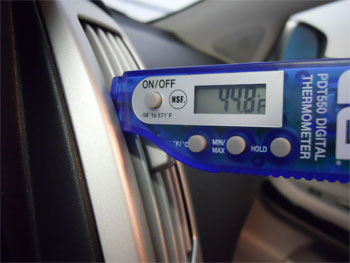
A thermometer inserted into the A/C vents reads 44°F in the right and center vents, but 52°F in the left (driver) side vent. What is the most likely cause?
CorrectThe correct answer is D. A disconnected air discharge vent tube is the most likely cause for the discharge air temperature to be greater in one vent. Answer A is not correct because too much refrigerant oil in the system would reduce the cooling for all vents and could not affect just the left side discharge vent temperature. Answer B is not correct because while a partially clogged orifice tube will cause a lack of cooling, it cannot cause a lack of cooling out of just one discharge air vent. Answer C is not correct because a blend door is used to adjust the amount of air that flows across the heater core after it has flowed through the evaporator to control the temperature of the discharge air and is not likely to cause a difference in air temperature at just one vent opening.
IncorrectThe correct answer is D. A disconnected air discharge vent tube is the most likely cause for the discharge air temperature to be greater in one vent. Answer A is not correct because too much refrigerant oil in the system would reduce the cooling for all vents and could not affect just the left side discharge vent temperature. Answer B is not correct because while a partially clogged orifice tube will cause a lack of cooling, it cannot cause a lack of cooling out of just one discharge air vent. Answer C is not correct because a blend door is used to adjust the amount of air that flows across the heater core after it has flowed through the evaporator to control the temperature of the discharge air and is not likely to cause a difference in air temperature at just one vent opening.
-
Question 10 of 92
10. Question
Category: Heating, Ventilation, A/C (HVAC) and Engine Cooling System Service, Diagnosis, and RepairTwo Technicians are discussing if a 1993 vehicle is equipped with a R-12 or a R-134a system. Technician A says that this information should be on an underhood label. Technician B says that the size and shape of the fittings can be used to help determine what refrigerant is in the system. Which Technician is correct?
CorrectThe correct answer is C. Both Technicians are correct. Technician A is correct because the vehicle manufacturer must supply a label that identifies the type of refrigerant system and the recharge capacity. Technician B is correct because R-12 and R-134a pressure gauge fittings are unique. Answers A, B, and D are not correct because both Technicians are correct.
IncorrectThe correct answer is C. Both Technicians are correct. Technician A is correct because the vehicle manufacturer must supply a label that identifies the type of refrigerant system and the recharge capacity. Technician B is correct because R-12 and R-134a pressure gauge fittings are unique. Answers A, B, and D are not correct because both Technicians are correct.
-
Question 11 of 92
11. Question
Category: Heating, Ventilation, A/C (HVAC) and Engine Cooling System Service, Diagnosis, and RepairAn air conditioning performance test is being performed. All of the following should be done except:
CorrectThe correct answer is D. A thermometer does not need to be placed in the inside air inlet door to perform an air-conditioning performance test because this would simply measure the temperature of the air being drawn back into the system to be cooled and would not be an important factor regarding the performance of the system. Answers A, B, and C are not correct because to perform an air-conditioning performance test, the blower should be on high (answer A), the doors should be open (answer B), and the controls set for maximum cooling (answer C).
IncorrectThe correct answer is D. A thermometer does not need to be placed in the inside air inlet door to perform an air-conditioning performance test because this would simply measure the temperature of the air being drawn back into the system to be cooled and would not be an important factor regarding the performance of the system. Answers A, B, and C are not correct because to perform an air-conditioning performance test, the blower should be on high (answer A), the doors should be open (answer B), and the controls set for maximum cooling (answer C).
-
Question 12 of 92
12. Question
Category: Heating, Ventilation, A/C (HVAC) and Engine Cooling System Service, Diagnosis, and RepairTwo Technicians are discussing refrigerant oil. Technician A says that PAG oil comes in more than one viscosity and that using the wrong thickness of oil could cause damage to the compressor. Technician B says that refrigerant oil must be kept in a sealed container. Which Technician is correct?
Correct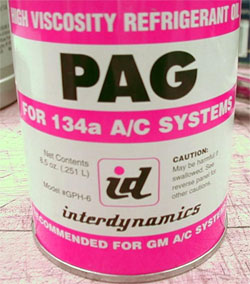
The correct answer is C. Both Technicians are correct. Technician A is correct because the oil specified by the vehicle manufacturer or the compressor manufacturer should be used to ensure proper lubrication and this includes the specified type and viscosity of refrigerant oil. Technician B is correct because refrigerant oil readily absorbs moisture from the air and must be stored in an air-tight container to avoid moisture contamination. Answers A, B, and D are not correct because both Technicians are correct.
IncorrectThe correct answer is C. Both Technicians are correct. Technician A is correct because the oil specified by the vehicle manufacturer or the compressor manufacturer should be used to ensure proper lubrication and this includes the specified type and viscosity of refrigerant oil. Technician B is correct because refrigerant oil readily absorbs moisture from the air and must be stored in an air-tight container to avoid moisture contamination. Answers A, B, and D are not correct because both Technicians are correct.
-
Question 13 of 92
13. Question
Category: Heating, Ventilation, A/C (HVAC) and Engine Cooling System Service, Diagnosis, and RepairA vehicle is being checked for a lack of cooling concern about two months after another shop had replaced the compressor. Technician A says that debris from the old compressor could have clogged the orifice tube. Technician B says that the system could be low on charge due to a leak in the system. Which Technician is correct?
CorrectThe correct answer is C. Both Technicians are correct. Technician A is correct because debris from the old compressor can become trapped on the orifice tube causing a restriction limiting the flow of refrigerant into the evaporator. Technician B is correct because a leak would cause a lack of cooling due to less refrigerant flowing through the evaporator. Answers A, B, and D are not correct because both Technicians are correct.
IncorrectThe correct answer is C. Both Technicians are correct. Technician A is correct because debris from the old compressor can become trapped on the orifice tube causing a restriction limiting the flow of refrigerant into the evaporator. Technician B is correct because a leak would cause a lack of cooling due to less refrigerant flowing through the evaporator. Answers A, B, and D are not correct because both Technicians are correct.
-
Question 14 of 92
14. Question
Category: Heating, Ventilation, A/C (HVAC) and Engine Cooling System Service, Diagnosis, and RepairA vehicle came to the shop with a system that was not cooling correctly. A low refrigerant charge caused by a leaking condenser was determined to be the cause. Before the refrigerant was recovered, an identifier was used to check the refrigerant. It was determined that the refrigerant was contaminated. What should the Technician do?
CorrectThe correct answer is A. The contaminated refrigerant should be recovered and sent to a separate container clearly labeled to contain contaminated refrigerant. Answer B is not correct because allowing refrigerant to escape into the atmosphere is illegal. Answer C is not correct because contaminated refrigerant should never be combined with usable refrigerant (virgin or recycled) because then the contamination is expanded and affects all of the refrigerant stored together. Answer D is not correct because even though this may work, the refrigerant will leak from the system and the only proper repair is to repair the leak which requires that the refrigerant be removed from the system.
IncorrectThe correct answer is A. The contaminated refrigerant should be recovered and sent to a separate container clearly labeled to contain contaminated refrigerant. Answer B is not correct because allowing refrigerant to escape into the atmosphere is illegal. Answer C is not correct because contaminated refrigerant should never be combined with usable refrigerant (virgin or recycled) because then the contamination is expanded and affects all of the refrigerant stored together. Answer D is not correct because even though this may work, the refrigerant will leak from the system and the only proper repair is to repair the leak which requires that the refrigerant be removed from the system.
-
Question 15 of 92
15. Question
Category: Heating, Ventilation, A/C (HVAC) and Engine Cooling System Service, Diagnosis, and RepairTwo Technicians are discussing leak testing of an air-conditioning system. Technician A says that the blower motor resistor pack can be removed to test the evaporator for possible leaks using a leak detector. Technician B says to check the evaporator for leaks at the condensate drain. Which Technician is correct?
CorrectThe correct answer is C. Both Technicians are correct. Technician A is correct because removing the blower motor resistor pack is a very efficient method to use to get access to the evaporator for leak detection. Technician B is correct because the condensate drain is located in the bottom of the evaporator housing and would provide access to the evaporator for leak detection. Answers A, B, and D are not correct because both Technicians are correct.
IncorrectThe correct answer is C. Both Technicians are correct. Technician A is correct because removing the blower motor resistor pack is a very efficient method to use to get access to the evaporator for leak detection. Technician B is correct because the condensate drain is located in the bottom of the evaporator housing and would provide access to the evaporator for leak detection. Answers A, B, and D are not correct because both Technicians are correct.
-
Question 16 of 92
16. Question
Category: Heating, Ventilation, A/C (HVAC) and Engine Cooling System Service, Diagnosis, and RepairThe air-conditioning system seems to be functioning correctly, but it does not cool as fast or as cold as a similar model. Which is the least likely cause?
CorrectThe correct answer is D. The least likely cause of a lack of cooling is a partially blocked condensate drain. A blocked condensate drain will cause an overflow of water of the evaporator case causing the floor of the passenger side to get wet but is unlikely to reduce cooling. Answers A, B, and C are not correct because all of these could cause reduced cooling.
IncorrectThe correct answer is D. The least likely cause of a lack of cooling is a partially blocked condensate drain. A blocked condensate drain will cause an overflow of water of the evaporator case causing the floor of the passenger side to get wet but is unlikely to reduce cooling. Answers A, B, and C are not correct because all of these could cause reduced cooling.
-
Question 17 of 92
17. Question
Category: Heating, Ventilation, A/C (HVAC) and Engine Cooling System Service, Diagnosis, and RepairA lack of cooling is being diagnosed. On an 80°F (27°C) day, both low and high pressure gauges read 87 psi (600 kPa). Technician A says that a clogged orifice tube is the most likely cause. Technician B says that the system is low on refrigerant charge. Which Technician is correct?
CorrectThe correct answer is D. Neither Technician is correct. Technician A is not correct because the pressure displayed on the gauges indicates that the compressor is not engaged. The pressure of R-134a at 80ºF (27ºC) is about 87 psi indicating that the system has equalized and is not operating. Even though the system may have a partially clogged orifice tube, this cannot be determined by the pressure gauges because the compressor is not engaged. Technician B is not correct because even though the system may be undercharged, this condition cannot be determined because the compressor is not engaged. Answer C is not correct because neither Technician is correct.
IncorrectThe correct answer is D. Neither Technician is correct. Technician A is not correct because the pressure displayed on the gauges indicates that the compressor is not engaged. The pressure of R-134a at 80ºF (27ºC) is about 87 psi indicating that the system has equalized and is not operating. Even though the system may have a partially clogged orifice tube, this cannot be determined by the pressure gauges because the compressor is not engaged. Technician B is not correct because even though the system may be undercharged, this condition cannot be determined because the compressor is not engaged. Answer C is not correct because neither Technician is correct.
-
Question 18 of 92
18. Question
Category: Heating, Ventilation, A/C (HVAC) and Engine Cooling System Service, Diagnosis, and RepairThe discharge line from the compressor is hot to the touch. Technician A says that the system is low on refrigerant. Technician B says that the compressor is worn and is not compressing the refrigerant enough for proper operation of the air-conditioning system. Which Technician is correct?
CorrectThe correct answer is D. Neither Technician is correct. It is normal for the discharge line to be hot to the touch on a properly operating air-conditioning system. Technician A is not correct because a low charge would reduce the temperature of the discharge line. Technician B is not correct because a worn compressor would create less than normal heat and temperature of the discharge line. Answer C is not correct because neither Technician is correct.
IncorrectThe correct answer is D. Neither Technician is correct. It is normal for the discharge line to be hot to the touch on a properly operating air-conditioning system. Technician A is not correct because a low charge would reduce the temperature of the discharge line. Technician B is not correct because a worn compressor would create less than normal heat and temperature of the discharge line. Answer C is not correct because neither Technician is correct.
-
Question 19 of 92
19. Question
Category: Heating, Ventilation, A/C (HVAC) and Engine Cooling System Service, Diagnosis, and RepairA strong pungent odor comes out of the air-conditioning vents. Technician A says that mouthwash should be poured into the air inlet near the windshield to stop the odor. Technician B says that fungicide should be sprayed onto the evaporator to stop the odor. Which Technician is correct?
CorrectThe correct answer is B. Technician B is correct because a fungicide is necessary to kill fungus and mildew growth that can grow on the evaporator fins due to the moist environment. Technician A is not correct because even though most mouthwash contains alcohol, it will not be effective killing fungus and mildew. Answers C and D are not correct because Technician B only is correct.
IncorrectThe correct answer is B. Technician B is correct because a fungicide is necessary to kill fungus and mildew growth that can grow on the evaporator fins due to the moist environment. Technician A is not correct because even though most mouthwash contains alcohol, it will not be effective killing fungus and mildew. Answers C and D are not correct because Technician B only is correct.
-
Question 20 of 92
20. Question
Category: Heating, Ventilation, A/C (HVAC) and Engine Cooling System Service, Diagnosis, and RepairTechnician A says that the refrigerant oil removed during reclaiming should be measured. Technician B says that refrigerant oil can be disposed of with regular engine oil. Which Technician is correct?
Correct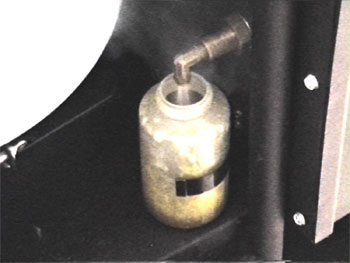
The correct answer is A. Technician A is correct because any refrigerant oil that is removed from the system during the recovery process must be measured to be assured that the proper amount of oil is in the system when recharged. Technician B is not correct because the refrigerant oil might contain hydrofluorocarbons (R-134a) or chlorofluorocarbons (R-12) making the oil hazardous and unable to be recycled as conventional waste oil. Answers C and D are not correct because Technician A only is correct.
IncorrectThe correct answer is A. Technician A is correct because any refrigerant oil that is removed from the system during the recovery process must be measured to be assured that the proper amount of oil is in the system when recharged. Technician B is not correct because the refrigerant oil might contain hydrofluorocarbons (R-134a) or chlorofluorocarbons (R-12) making the oil hazardous and unable to be recycled as conventional waste oil. Answers C and D are not correct because Technician A only is correct.
-
Question 21 of 92
21. Question
Category: Heating, Ventilation, A/C (HVAC) and Engine Cooling System Service, Diagnosis, and RepairRefrigerant should be identified ______________.
CorrectThe correct answer is B. The refrigerant should be identified at the start of the A/C system service before it is recovered to guard against the possibility of contaminating the storage container or the recovery/recycling equipment with an unknown refrigerant. Answers A, C, and D are not correct because the refrigerant should be checked before any service work is performed on the system.
IncorrectThe correct answer is B. The refrigerant should be identified at the start of the A/C system service before it is recovered to guard against the possibility of contaminating the storage container or the recovery/recycling equipment with an unknown refrigerant. Answers A, C, and D are not correct because the refrigerant should be checked before any service work is performed on the system.
-
Question 22 of 92
22. Question
Category: Heating, Ventilation, A/C (HVAC) and Engine Cooling System Service, Diagnosis, and RepairTo be sure that all of the moisture in an air-conditioning system has been boiled and removed, a vacuum of at least ______ in. Hg should be drawn on the system for at least _____ minutes.
CorrectThe correct answer is A. The refrigerant system should be evacuated to a level of 28 in. Hg or higher, for at least 45 minutes to be sure that the moisture is boiled out of the system. Answers B, C, and D are all possible and should be done, but the question asks what values are the minimum that should be achieved to be sure that the moisture is boiled out of the system before recharging with refrigerant.
IncorrectThe correct answer is A. The refrigerant system should be evacuated to a level of 28 in. Hg or higher, for at least 45 minutes to be sure that the moisture is boiled out of the system. Answers B, C, and D are all possible and should be done, but the question asks what values are the minimum that should be achieved to be sure that the moisture is boiled out of the system before recharging with refrigerant.
-
Question 23 of 92
23. Question
Category: Heating, Ventilation, A/C (HVAC) and Engine Cooling System Service, Diagnosis, and RepairAfter the refrigerant has been recovered and recycled, where should it be kept for long-term storage?
CorrectThe correct answer is D. Refrigerant should be stored in a container that meets Department of Transportation (DOT) standards because it will be transported. Answer A is not correct because the container has to meet DOT, not EPA standards to be able to be shipped. Answers B and C are not correct because even though refrigerant can be kept in the recovery or recycling machine, eventually it must be transferred to another storage container.
IncorrectThe correct answer is D. Refrigerant should be stored in a container that meets Department of Transportation (DOT) standards because it will be transported. Answer A is not correct because the container has to meet DOT, not EPA standards to be able to be shipped. Answers B and C are not correct because even though refrigerant can be kept in the recovery or recycling machine, eventually it must be transferred to another storage container.
-
Question 24 of 92
24. Question
Category: Heating, Ventilation, A/C (HVAC) and Engine Cooling System Service, Diagnosis, and RepairWhat should the Technician do before recovering refrigerant from a vehicle?
CorrectThe correct answer is A. Before refrigerant is recovered, a refrigerant identifier and a sealant identifier should be used to avoid the possibility that the system has the wrong refrigerant or a mixture of refrigerants. Answer B is not correct because the wrong refrigerant could be exposed to the pressure gauges and/or equipment used to check high and low pressures. Answer C is not correct because even though the Schrader valves should be checked, it is not the first item that should be done before recovering refrigerant. Answer D is not correct because even though starting the engine and allowing the system to operate for a few minutes will not do any harm, it is not a necessary first step before refrigerant recovery.
IncorrectThe correct answer is A. Before refrigerant is recovered, a refrigerant identifier and a sealant identifier should be used to avoid the possibility that the system has the wrong refrigerant or a mixture of refrigerants. Answer B is not correct because the wrong refrigerant could be exposed to the pressure gauges and/or equipment used to check high and low pressures. Answer C is not correct because even though the Schrader valves should be checked, it is not the first item that should be done before recovering refrigerant. Answer D is not correct because even though starting the engine and allowing the system to operate for a few minutes will not do any harm, it is not a necessary first step before refrigerant recovery.
-
Question 25 of 92
25. Question
Category: Heating, Ventilation, A/C (HVAC) and Engine Cooling System Service, Diagnosis, and RepairA Technician discovers that 20% of the refrigerant in a vehicle is unknown. What service operation should the Service Technician perform?
CorrectThe correct answer is B. The best answer is to recover the refrigerant into a separate container labeled unknown and to dispose of the contents of the container when full through a licensed recycler. Answer A is not correct because the unknown refrigerant can contaminate the recovery/recycling equipment. Answer C is not correct because the unknown refrigerant will not be or should not be purged from the system. Answer D is not correct because unknown refrigerant is not the same as non-condensable gases (air).
IncorrectThe correct answer is B. The best answer is to recover the refrigerant into a separate container labeled unknown and to dispose of the contents of the container when full through a licensed recycler. Answer A is not correct because the unknown refrigerant can contaminate the recovery/recycling equipment. Answer C is not correct because the unknown refrigerant will not be or should not be purged from the system. Answer D is not correct because unknown refrigerant is not the same as non-condensable gases (air).
-
Question 26 of 92
26. Question
Category: Heating, Ventilation, A/C (HVAC) and Engine Cooling System Service, Diagnosis, and Repair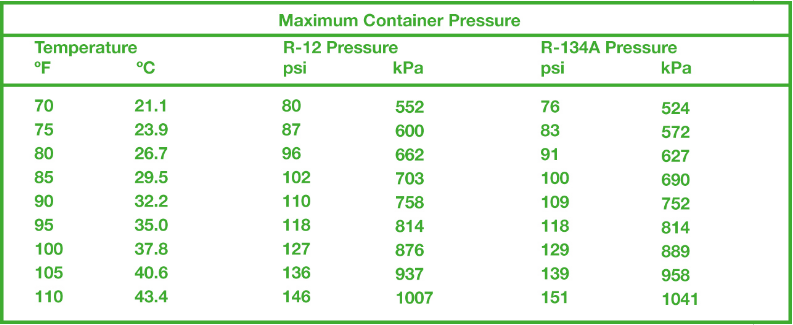
A Technician checked the pressure on a 30 lb. container of R-134a at 80F (27C) and the pressure was 101 psi (700 kPa) (see chart). Technician A says that the tank should be vented until the pressure is reduced if the identifier detected non-condensable gases (air) was in the refrigerant. Technician B says that additional refrigerant should be added to lower the pressure. Which Technician is correct?
CorrectThe correct answer is A. Technician A is correct because according to the chart, the container pressure should not exceed 91 psi (627 kPa) unless there is some air in the tank which contributes to the pressure but does not act as a refrigerant. The tank should be vented until the pressure is restored to normal. Technician B is not correct because additional refrigerant would not reduce the pressure in the storage container. Answers C and D are not correct because Technician A only is correct.
IncorrectThe correct answer is A. Technician A is correct because according to the chart, the container pressure should not exceed 91 psi (627 kPa) unless there is some air in the tank which contributes to the pressure but does not act as a refrigerant. The tank should be vented until the pressure is restored to normal. Technician B is not correct because additional refrigerant would not reduce the pressure in the storage container. Answers C and D are not correct because Technician A only is correct.
-
Question 27 of 92
27. Question
Category: Heating, Ventilation, A/C (HVAC) and Engine Cooling System Service, Diagnosis, and Repair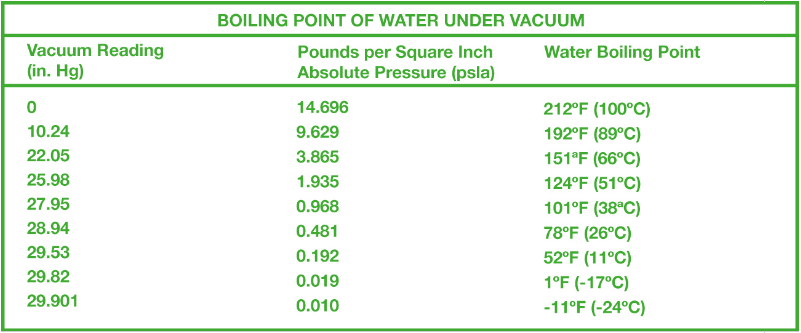
According to the chart, how much vacuum needs to be applied to boil water from an air-conditioning system if the temperature is 78°F (26°C)?
CorrectThe correct answer is C. According to the chart, a vacuum of at least 29 in. Hg is necessary to boil moisture from the air-conditioning system at a temperature of 78F (26C). Answers A and B are not correct because the levels of vacuum will not be low enough to cause any trapped moisture in the system to boil. Answer D is not correct because even though 30 in. Hg will cause any moisture in the system to boil, it is not the minimum vacuum that is necessary to boil moisture out of the system.
IncorrectThe correct answer is C. According to the chart, a vacuum of at least 29 in. Hg is necessary to boil moisture from the air-conditioning system at a temperature of 78F (26C). Answers A and B are not correct because the levels of vacuum will not be low enough to cause any trapped moisture in the system to boil. Answer D is not correct because even though 30 in. Hg will cause any moisture in the system to boil, it is not the minimum vacuum that is necessary to boil moisture out of the system.
-
Question 28 of 92
28. Question
Category: Heating, Ventilation, A/C (HVAC) and Engine Cooling System Service, Diagnosis, and RepairAn orifice tube-type air-conditioning system is being serviced with HFC-134a(R-134a). Which SAE standard recovery, recycling and recharging machine should be used?
CorrectThe correct answer is C. The latest current standard machine for use with HFC-134a meets SAE standard J2788. Answer A is not correct because J1770 is the older standard for use with R-12 and R-134 and no longer meet the latest standards for accuracy. Answer B (J 2210) is not correct because this standard does not meet the accuracy requirements of the latest standard. Answer D (J2851) is not correct because this standard is used for R-1234yf and not for R-134a.
IncorrectThe correct answer is C. The latest current standard machine for use with HFC-134a meets SAE standard J2788. Answer A is not correct because J1770 is the older standard for use with R-12 and R-134 and no longer meet the latest standards for accuracy. Answer B (J 2210) is not correct because this standard does not meet the accuracy requirements of the latest standard. Answer D (J2851) is not correct because this standard is used for R-1234yf and not for R-134a.
-
Question 29 of 92
29. Question
Category: Heating, Ventilation, A/C (HVAC) and Engine Cooling System Service, Diagnosis, and RepairAfter the water pump was replaced and the cooling system refilled with coolant, the heater stopped providing hot air. Which is the most likely cause?
CorrectThe correct answer is B. Answer B is correct because if air is trapped in the heater core, the coolant cannot flow through and provide heat. This is a common problem because the heater core is usually located at the highest part of the cooling system and air always travels upwards. Answer A is not correct because even though the incorrect concentration of antifreeze in the coolant could affect the freezing protection and heat transfer ability of the coolant, it is unlikely to cause a lack of heat from the heater. Answer C is not correct because even though a defective heater control valve (stuck closed) could cause a lack of heat from the heater, it is unlikely to fail at the same time as the water pump repair and coolant replacement procedure. Answer D is not correct because even though a slipping water pump drive belt could reduce the flow of coolant through the system, it is unlikely to cause a lack of heat from the heater
IncorrectThe correct answer is B. Answer B is correct because if air is trapped in the heater core, the coolant cannot flow through and provide heat. This is a common problem because the heater core is usually located at the highest part of the cooling system and air always travels upwards. Answer A is not correct because even though the incorrect concentration of antifreeze in the coolant could affect the freezing protection and heat transfer ability of the coolant, it is unlikely to cause a lack of heat from the heater. Answer C is not correct because even though a defective heater control valve (stuck closed) could cause a lack of heat from the heater, it is unlikely to fail at the same time as the water pump repair and coolant replacement procedure. Answer D is not correct because even though a slipping water pump drive belt could reduce the flow of coolant through the system, it is unlikely to cause a lack of heat from the heater
-
Question 30 of 92
30. Question
Category: Heating, Ventilation, A/C (HVAC) and Engine Cooling System Service, Diagnosis, and RepairA customer complained that the heat from the heater would come and go and vary with engine speed. What is the most likely cause?
CorrectThe correct answer is B. The most likely cause is a low coolant level causing coolant to flow through the heater core occasionally. Because the heater core is usually higher in the system than the engine block and the heater hoses create some resistance to coolant flow, most of the available coolant will flow through and protect the engine. Answer A is not correct because even though a defective thermostat could cause a lack of heat from the heater, it is unlikely to cause some heat at times and no heat at other times. Answer C is not correct because while a defective water pump could cause a lack of circulation, which could reduce the amount of heat from the heater, it is unlikely to cause the heat to come and go intermittently. Answer D is not correct because, while an incorrect antifreeze to water mixture could cause corrosion or other cooling system related problems, it is unlikely to cause a lack of heat concern.
IncorrectThe correct answer is B. The most likely cause is a low coolant level causing coolant to flow through the heater core occasionally. Because the heater core is usually higher in the system than the engine block and the heater hoses create some resistance to coolant flow, most of the available coolant will flow through and protect the engine. Answer A is not correct because even though a defective thermostat could cause a lack of heat from the heater, it is unlikely to cause some heat at times and no heat at other times. Answer C is not correct because while a defective water pump could cause a lack of circulation, which could reduce the amount of heat from the heater, it is unlikely to cause the heat to come and go intermittently. Answer D is not correct because, while an incorrect antifreeze to water mixture could cause corrosion or other cooling system related problems, it is unlikely to cause a lack of heat concern.
-
Question 31 of 92
31. Question
Category: Heating, Ventilation, A/C (HVAC) and Engine Cooling System Service, Diagnosis, and RepairA Service Technician is replacing a water (coolant) pump. Technician A says that used coolant should be properly disposed of or kept for recycling. Technician B says that the used coolant should be reused to refill the cooling system after the repair is completed. Which Technician is correct?
CorrectThe correct answer is A. Technician A is correct because used coolant contains metals that were absorbed from the engine and cooling system components during engine operation and therefore, should be recycled by sending to an off-site recycling company or by doing it on-site using a coolant recycling machine. Technician B is not correct because most vehicle manufacturers advise against reusing coolant and usually specify that new coolant be used when refilling the cooling system. Answers C and D are not correct because Technician A only is correct.
IncorrectThe correct answer is A. Technician A is correct because used coolant contains metals that were absorbed from the engine and cooling system components during engine operation and therefore, should be recycled by sending to an off-site recycling company or by doing it on-site using a coolant recycling machine. Technician B is not correct because most vehicle manufacturers advise against reusing coolant and usually specify that new coolant be used when refilling the cooling system. Answers C and D are not correct because Technician A only is correct.
-
Question 32 of 92
32. Question
Category: Heating, Ventilation, A/C (HVAC) and Engine Cooling System Service, Diagnosis, and RepairA customer complained of lack of heat from the heater. A check of the cooling system shows that the upper radiator hose is not getting hot. Technician A says that the thermostat may be defective (stuck open). Technician B says that the cause could be a defective (always engaged) thermostat cooling fan. Which Technician is correct?
Correct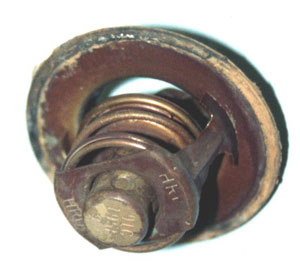
The correct answer is A. Technician A is correct because the temperature of the coolant is regulated by the thermostat, and if it is stuck open or partially open, the coolant temperature will be lower than normal. Technician B is not correct because the fan helps remove heat from the radiator but does not regulate the coolant temperature. Answers C and D are not correct because Technician A only is correct.
IncorrectThe correct answer is A. Technician A is correct because the temperature of the coolant is regulated by the thermostat, and if it is stuck open or partially open, the coolant temperature will be lower than normal. Technician B is not correct because the fan helps remove heat from the radiator but does not regulate the coolant temperature. Answers C and D are not correct because Technician A only is correct.
-
Question 33 of 92
33. Question
Category: Heating, Ventilation, A/C (HVAC) and Engine Cooling System Service, Diagnosis, and RepairA lack of heat from the heater is being diagnosed. Which is the most likely cause?
Correct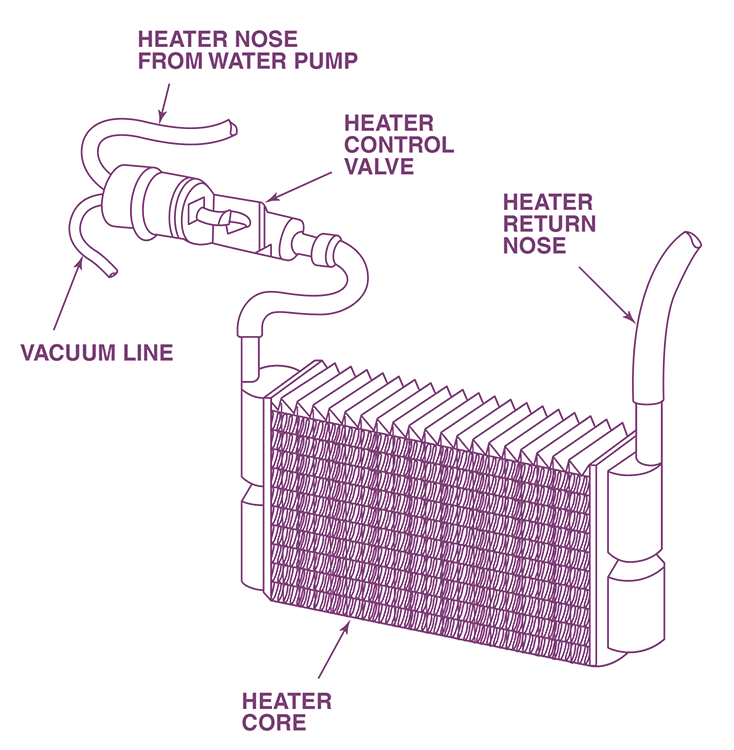
The correct answer is C. The most likely cause of a lack of heat from the heater is a partially clogged heater core. Answer A is not correct because a clogged radiator would prevent the proper cooling of the coolant and would not cause a decrease in heater performance. Answer B is not correct because even though coolant flow could be affected slightly if the heater hoses were reversed, this condition would not prevent heat coming from the heater. Answer D is not correct because even though a defective water pump could reduce the flow of coolant through the system, it is not the most likely cause of a lack of heat concern.
IncorrectThe correct answer is C. The most likely cause of a lack of heat from the heater is a partially clogged heater core. Answer A is not correct because a clogged radiator would prevent the proper cooling of the coolant and would not cause a decrease in heater performance. Answer B is not correct because even though coolant flow could be affected slightly if the heater hoses were reversed, this condition would not prevent heat coming from the heater. Answer D is not correct because even though a defective water pump could reduce the flow of coolant through the system, it is not the most likely cause of a lack of heat concern.
-
Question 34 of 92
34. Question
Category: Heating, Ventilation, A/C (HVAC) and Engine Cooling System Service, Diagnosis, and Repair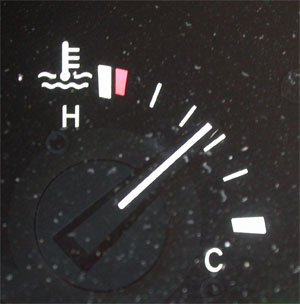
The temperature gauge approaches the red part of the temperature gauge (260°F or 127°C) if driven at slow speeds but does not overheat if driven at highway speeds. What is the most likely cause?
Correct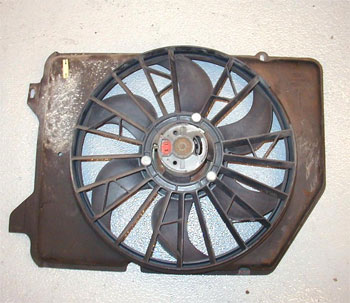
The correct answer is D. An inoperative cooling fan is the most likely cause of overheating at slow speeds only because at highway speeds, normal airflow permits proper heat transfer from the radiator. Answer A is not correct because even though a low coolant level could cause overheating, it is not the most likely cause of overheating only when the vehicle is being driven at slow speeds. Answer B is not correct because even though an incorrect antifreeze/water mixture could cause cooling system problems, it is unlikely to cause overheating. Answer C is not correct because even though a defective water pump could cause overheating, it is unlikely to cause overheating only when the vehicle is being driven at slow speeds.
IncorrectThe correct answer is D. An inoperative cooling fan is the most likely cause of overheating at slow speeds only because at highway speeds, normal airflow permits proper heat transfer from the radiator. Answer A is not correct because even though a low coolant level could cause overheating, it is not the most likely cause of overheating only when the vehicle is being driven at slow speeds. Answer B is not correct because even though an incorrect antifreeze/water mixture could cause cooling system problems, it is unlikely to cause overheating. Answer C is not correct because even though a defective water pump could cause overheating, it is unlikely to cause overheating only when the vehicle is being driven at slow speeds.
-
Question 35 of 92
35. Question
Category: Heating, Ventilation, A/C (HVAC) and Engine Cooling System Service, Diagnosis, and RepairThe coolant in a radiator froze when the temperature dropped to -20°F (-29°C). Technician A says that the 100% pure antifreeze in the cooling system could be the cause. Technician B says that too much water in the antifreeze could be the cause. Which Technician is correct?
CorrectThe correct answer is C. Both Technicians are correct. Technician A is correct because pure 100% antifreeze will freeze from -8°F to +8°F (-22°C to -13°C), unless it is mixed with water. Technician B is correct because too much water added to the coolant could raise the freezing point of the coolant. Answers A, B, and D are not correct because both Technicians are correct.
IncorrectThe correct answer is C. Both Technicians are correct. Technician A is correct because pure 100% antifreeze will freeze from -8°F to +8°F (-22°C to -13°C), unless it is mixed with water. Technician B is correct because too much water added to the coolant could raise the freezing point of the coolant. Answers A, B, and D are not correct because both Technicians are correct.
-
Question 36 of 92
36. Question
Category: Heating, Ventilation, A/C (HVAC) and Engine Cooling System Service, Diagnosis, and RepairAn engine coolant temperature is measured to be 210F (100C) even though the thermostat specification states that a 195 unit is installed in the vehicle. Technician A says the thermostat is defective. Technician B says that the radiator is clogged causing the temperature to be higher than normal. Which Technician is correct?
CorrectThe correct answer is D. Neither Technician is correct. Technician A is not correct because 210°F is within the normal operating range of a 195°F thermostat, which starts to open at 195°F and is fully open 20° higher or by 215°F. Technician B is not correct because even though a clogged radiator can cause the engine to overheat, the temperature of the coolant is within the normal range and a clogged radiator is not likely. Answers A, B, and C are not correct because neither Technician is correct.
IncorrectThe correct answer is D. Neither Technician is correct. Technician A is not correct because 210°F is within the normal operating range of a 195°F thermostat, which starts to open at 195°F and is fully open 20° higher or by 215°F. Technician B is not correct because even though a clogged radiator can cause the engine to overheat, the temperature of the coolant is within the normal range and a clogged radiator is not likely. Answers A, B, and C are not correct because neither Technician is correct.
-
Question 37 of 92
37. Question
Category: Heating, Ventilation, A/C (HVAC) and Engine Cooling System Service, Diagnosis, and RepairTechnician A says that the radiator should always be inspected for leaks and proper flow before installing a rebuilt engine. Technician B says that overheating during slow city driving can be due to a defective electric cooling fan. Which Technician is correct?
CorrectThe correct answer is C. Both Technicians are correct. Technician A is correct because the radiator should always be checked for proper operation before using it in a vehicle with a new or rebuilt engine. Technician B is correct because overheating during slow driving could be caused by an inoperative electric cooling fan. Answers A, B, and D are not correct because both Technicians are correct.
IncorrectThe correct answer is C. Both Technicians are correct. Technician A is correct because the radiator should always be checked for proper operation before using it in a vehicle with a new or rebuilt engine. Technician B is correct because overheating during slow driving could be caused by an inoperative electric cooling fan. Answers A, B, and D are not correct because both Technicians are correct.
-
Question 38 of 92
38. Question
Category: Heating, Ventilation, A/C (HVAC) and Engine Cooling System Service, Diagnosis, and Repair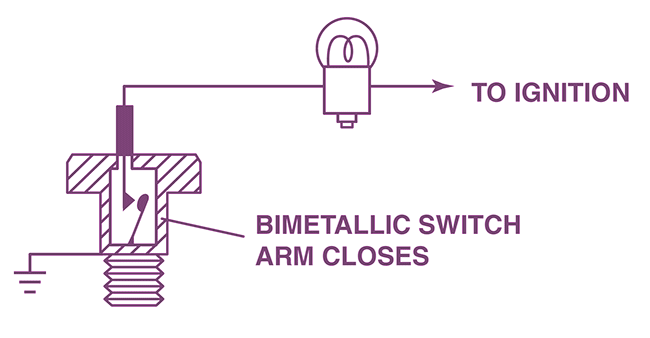
The “hot” light on the dash is being discussed by two Technicians. Technician A says that the light comes on if the cooling system temperature is too high for safe operation of the engine. Technician B says that the light comes on whenever there is a decrease (drop) in cooling system pressure. Which Technician is correct?
CorrectThe correct answer is A. Technician A is correct because the HOT light (engine coolant temperature warning lamp) will come on at about 258° F (125° C) to warn the driver that the engine coolant temperature is too high for safe engine operation. Technician B is not correct because the warning light does not react to cooling system pressure, just temperature. Answers C and D are not correct because only Technician A is correct.
IncorrectThe correct answer is A. Technician A is correct because the HOT light (engine coolant temperature warning lamp) will come on at about 258° F (125° C) to warn the driver that the engine coolant temperature is too high for safe engine operation. Technician B is not correct because the warning light does not react to cooling system pressure, just temperature. Answers C and D are not correct because only Technician A is correct.
-
Question 39 of 92
39. Question
Category: Heating, Ventilation, A/C (HVAC) and Engine Cooling System Service, Diagnosis, and RepairA customer complains that the heater works sometimes, but sometimes only cold air comes out while driving. Technician A says that the water pump is defective. Technician B says that the cooling system could be low on coolant. Which Technician is correct?
CorrectThe correct answer is B. Technician B is correct because the heater will have coolant flowing through the core when the water pump is operating slowly such as during engine idle. However, when the engine speed increases, the coolant will be taking the path of lower resistance and bypass the heater core unless the coolant level is properly filled. Technician A is not correct because even though the water pump could have worn impeller blades, the most likely cause is low coolant level. Answers C and D are not correct because only Technician B is correct.
IncorrectThe correct answer is B. Technician B is correct because the heater will have coolant flowing through the core when the water pump is operating slowly such as during engine idle. However, when the engine speed increases, the coolant will be taking the path of lower resistance and bypass the heater core unless the coolant level is properly filled. Technician A is not correct because even though the water pump could have worn impeller blades, the most likely cause is low coolant level. Answers C and D are not correct because only Technician B is correct.
-
Question 40 of 92
40. Question
Category: Heating, Ventilation, A/C (HVAC) and Engine Cooling System Service, Diagnosis, and RepairA cooling system is being refilled following a repair. Technician A says to use conventional green antifreeze (ethylene glycol-based with silicate and phosphate additives) regardless of the type of coolant originally in the system. Technician B says to refill the system with the coolant specified for use by the vehicle manufacturer. Which Technician is correct?
CorrectThe correct answer is B. Technician B is correct because vehicle manufacturers specify a variety of coolants based on engine design as well as the materials used in the engine and cooling system. The specified coolant should be used to ensure proper service life. Technician A is not correct because even though conventional green antifreeze can provide the necessary cooling system protection against freezing, it may contain additives that are not compatible with the material used in the engine or cooling system. Answers C and D re not correct because Technician B only is correct.
IncorrectThe correct answer is B. Technician B is correct because vehicle manufacturers specify a variety of coolants based on engine design as well as the materials used in the engine and cooling system. The specified coolant should be used to ensure proper service life. Technician A is not correct because even though conventional green antifreeze can provide the necessary cooling system protection against freezing, it may contain additives that are not compatible with the material used in the engine or cooling system. Answers C and D re not correct because Technician B only is correct.
-
Question 41 of 92
41. Question
Category: Heating, Ventilation, A/C (HVAC) and Engine Cooling System Service, Diagnosis, and RepairThe windshield will not defog even though the defroster and/or the air-conditioning system seems to be functioning correctly. What is the most likely cause?
Correct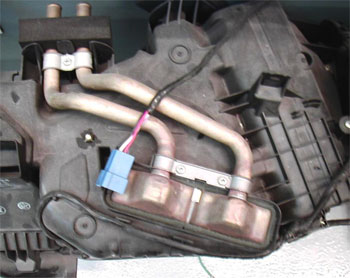
The correct answer is A. A leaking heater core will cause the fogging of the windshield due to the pressure in the cooling system forcing the coolant through a hole in the heater core and through the ducts onto the windshield. Answer B is not correct because a leak in the evaporator would allow refrigerant to escape reducing the effectiveness of the air conditioning but will not cause the windshield to become fogged. Answer C is not correct because while a stuck blend door could affect the temperature of the discharge air into the vehicle, it cannot cause fogging of the windshield. Answer D is not correct because if the air-conditioning system were low on refrigerant charge, the cooling of the interior would be reduced but would not cause the windshield to become fogged.
IncorrectThe correct answer is A. A leaking heater core will cause the fogging of the windshield due to the pressure in the cooling system forcing the coolant through a hole in the heater core and through the ducts onto the windshield. Answer B is not correct because a leak in the evaporator would allow refrigerant to escape reducing the effectiveness of the air conditioning but will not cause the windshield to become fogged. Answer C is not correct because while a stuck blend door could affect the temperature of the discharge air into the vehicle, it cannot cause fogging of the windshield. Answer D is not correct because if the air-conditioning system were low on refrigerant charge, the cooling of the interior would be reduced but would not cause the windshield to become fogged.
-
Question 42 of 92
42. Question
Category: Heating, Ventilation, A/C (HVAC) and Engine Cooling System Service, Diagnosis, and Repair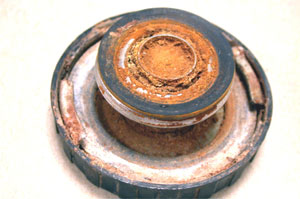
This radiator cap was discovered during routine service. Technician A says that the cooling system should be flushed and refilled with the specified coolant. Technician B says that the cap should be replaced. Which Technician is correct?
CorrectThe correct answer is C. Both Technicians are correct. Technician A is correct because the system is obviously rusty and the system should be thoroughly flushed before being refilled with the proper coolant. Technician B is correct because the deposits cannot be thoroughly cleaned from the radiator cap and therefore, it should be replaced to ensure that the cap functions correctly. Answers A, B, and D are not correct because both Technicians are correct.
IncorrectThe correct answer is C. Both Technicians are correct. Technician A is correct because the system is obviously rusty and the system should be thoroughly flushed before being refilled with the proper coolant. Technician B is correct because the deposits cannot be thoroughly cleaned from the radiator cap and therefore, it should be replaced to ensure that the cap functions correctly. Answers A, B, and D are not correct because both Technicians are correct.
-
Question 43 of 92
43. Question
Category: Heating, Ventilation, A/C (HVAC) and Engine Cooling System Service, Diagnosis, and RepairThe upper radiator hose collapses when the engine is turned off. Which is the most likely cause?
Correct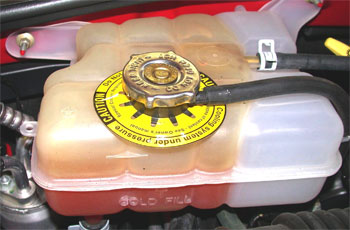
The correct answer is A. A defective radiator cap would prevent the coolant from flowing back into the radiator as the engine cools and the coolant contracts creating a vacuum, which can cause the upper radiator to collapse. Answer B is not correct because even though the upper hose may be defective, it is not the cause of it collapsing as the engine cools. Answer C is not correct because even though a clogged radiator can cause cooling system problems, it will not cause the upper radiator hose to collapse as the engine cools. Answer D is not correct because a low coolant level could cause overheating but not a collapsed upper radiator hose.
IncorrectThe correct answer is A. A defective radiator cap would prevent the coolant from flowing back into the radiator as the engine cools and the coolant contracts creating a vacuum, which can cause the upper radiator to collapse. Answer B is not correct because even though the upper hose may be defective, it is not the cause of it collapsing as the engine cools. Answer C is not correct because even though a clogged radiator can cause cooling system problems, it will not cause the upper radiator hose to collapse as the engine cools. Answer D is not correct because a low coolant level could cause overheating but not a collapsed upper radiator hose.
-
Question 44 of 92
44. Question
Category: Heating, Ventilation, A/C (HVAC) and Engine Cooling System Service, Diagnosis, and RepairA thermostatic fan clutch is leaking fluid. Technician A says that the unit should be replaced. Technician B says that it can cause the engine to overheat. Which Technician is correct?
Correct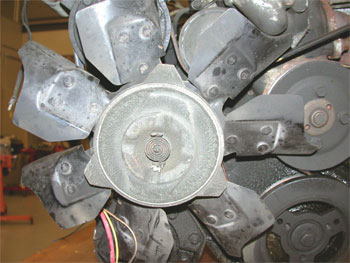
The correct answer is C. Both Technicians are correct. Technician A is correct because the leaking viscous silicone fluid from a thermostatic fan clutch is an indication that the unit may not be able to engage when the temperature rises high enough to require the additional airflow of the fan to properly cool the radiator. The wise Technician should recommend that the unit be replaced before the engine overheats due to a lack of proper airflow through the radiator. Technician B is correct because the lack of airflow through the radiator can cause the engine to overheat especially during city driving. Answers A, B, and D are not correct because both Technicians are correct.
IncorrectThe correct answer is C. Both Technicians are correct. Technician A is correct because the leaking viscous silicone fluid from a thermostatic fan clutch is an indication that the unit may not be able to engage when the temperature rises high enough to require the additional airflow of the fan to properly cool the radiator. The wise Technician should recommend that the unit be replaced before the engine overheats due to a lack of proper airflow through the radiator. Technician B is correct because the lack of airflow through the radiator can cause the engine to overheat especially during city driving. Answers A, B, and D are not correct because both Technicians are correct.
-
Question 45 of 92
45. Question
Category: Heating, Ventilation, A/C (HVAC) and Engine Cooling System Service, Diagnosis, and Repair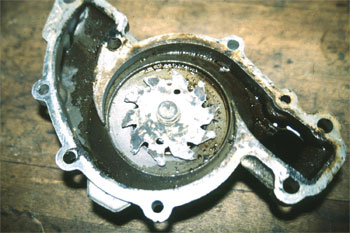
The water pump shown was removed from an engine that was running too hot and the impeller blades were found to excessively worn. Technician A says that the cooling system should be flushed before being refilled with coolant. Technician B says that the specified coolant should be used to help avoid failure of the replacement pump. Which Technician is correct?
CorrectThe correct answer is C. Both Technicians are correct. Technician A is correct because rust or other contaminates could have caused the vanes of the pump to become corroded and flushing will clean the system to help prevent this type of reoccurring failure. Technician B is correct because some vehicle manufacturers recommend the use of antifreeze coolant that does not contain silicates that can lead to water pump wear as shown. Answers A, B, and D are not correct because both Technicians are correct.
IncorrectThe correct answer is C. Both Technicians are correct. Technician A is correct because rust or other contaminates could have caused the vanes of the pump to become corroded and flushing will clean the system to help prevent this type of reoccurring failure. Technician B is correct because some vehicle manufacturers recommend the use of antifreeze coolant that does not contain silicates that can lead to water pump wear as shown. Answers A, B, and D are not correct because both Technicians are correct.
-
Question 46 of 92
46. Question
Category: Heating, Ventilation, A/C (HVAC) and Engine Cooling System Service, Diagnosis, and Repair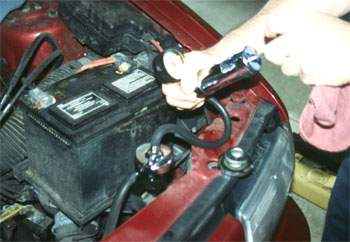
A pressure gauge is installed on the radiator filler neck and the system pressurized to 15 psi. After a few minutes, the pressure was down to 5 psi according to the gauge on the tester. What is the least likely cause?
Correct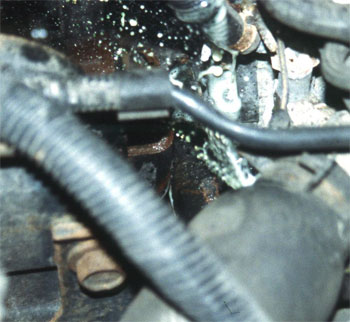
The correct answer is B. A leak in the evaporator would not cause the pressure in the cooling system to drop because it is part of the air-conditioning system and even though it is located in the same housing as the heater core, it is not part of the engine cooling system. Answers A, C, and D are not correct because a leak in any of these components would cause the pressure to drop in the cooling system.
IncorrectThe correct answer is B. A leak in the evaporator would not cause the pressure in the cooling system to drop because it is part of the air-conditioning system and even though it is located in the same housing as the heater core, it is not part of the engine cooling system. Answers A, C, and D are not correct because a leak in any of these components would cause the pressure to drop in the cooling system.
-
Question 47 of 92
47. Question
Category: Heating, Ventilation, A/C (HVAC) and Engine Cooling System Service, Diagnosis, and Repair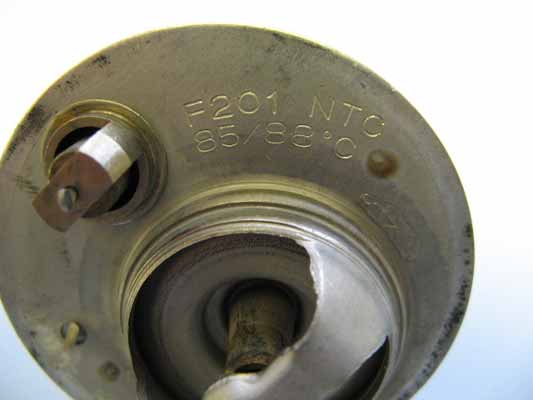
The “jiggle” valve on this thermostat should be located where when installed in the engine?
CorrectThe answer Correct is B. The jiggle valve, if equipped in a thermostat, should be located towards the top of the housing where any trapped air can escape. Answer A (at the bottom of the thermostat opening) is not correct because the jiggle valve needs to be toward the top to allow any trapped air to escape. Answer C (in any location) is not correct because the jiggle valve needs to be toward the top where the air goes for the valve to allow any trapped air to escape. Answer D (the jiggle valve type thermostat should not be used) is not correct because the jiggle valve is used to help keep air from getting trapped in the cooling system.
IncorrectThe answer Correct is B. The jiggle valve, if equipped in a thermostat, should be located towards the top of the housing where any trapped air can escape. Answer A (at the bottom of the thermostat opening) is not correct because the jiggle valve needs to be toward the top to allow any trapped air to escape. Answer C (in any location) is not correct because the jiggle valve needs to be toward the top where the air goes for the valve to allow any trapped air to escape. Answer D (the jiggle valve type thermostat should not be used) is not correct because the jiggle valve is used to help keep air from getting trapped in the cooling system.
-
Question 48 of 92
48. Question
Category: Heating, Ventilation, A/C (HVAC) and Engine Cooling System Service, Diagnosis, and Repair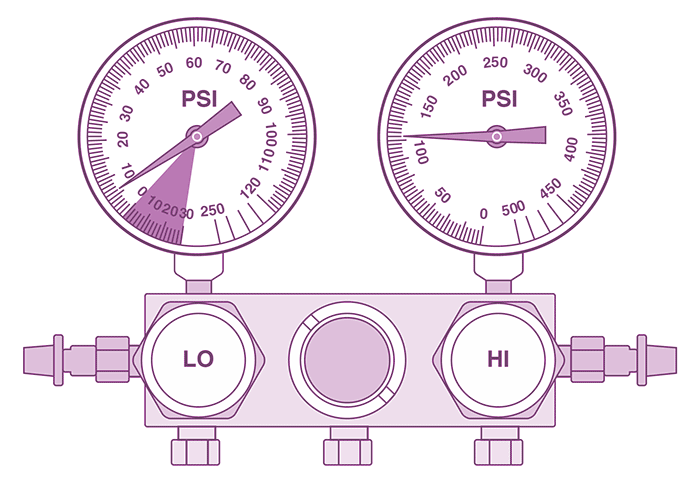
The A/C discharge air temperature is warm. The pressure gauges shown represent which most likely cause?
CorrectThe correct answer is A. An insufficient amount of refrigerant metered into the evaporator will cause low pressure on both the low side gauge and the high side gauge and warmer than normal discharge air temperature. Answer B is not correct because a lack of airflow through the condenser will cause the high side pressure to be higher than normal. Answer C is not correct because while a defective compressor will cause a lower than normal high side pressure gauge reading, it will not cause the low side gauge to read lower than normal. Answer D is not correct because icing on the evaporator would be the result of a fault in the system that would allow the evaporator temperature to drop below freezing creating the ice, which would block the airflow.
IncorrectThe correct answer is A. An insufficient amount of refrigerant metered into the evaporator will cause low pressure on both the low side gauge and the high side gauge and warmer than normal discharge air temperature. Answer B is not correct because a lack of airflow through the condenser will cause the high side pressure to be higher than normal. Answer C is not correct because while a defective compressor will cause a lower than normal high side pressure gauge reading, it will not cause the low side gauge to read lower than normal. Answer D is not correct because icing on the evaporator would be the result of a fault in the system that would allow the evaporator temperature to drop below freezing creating the ice, which would block the airflow.
-
Question 49 of 92
49. Question
Category: Heating, Ventilation, A/C (HVAC) and Engine Cooling System Service, Diagnosis, and Repair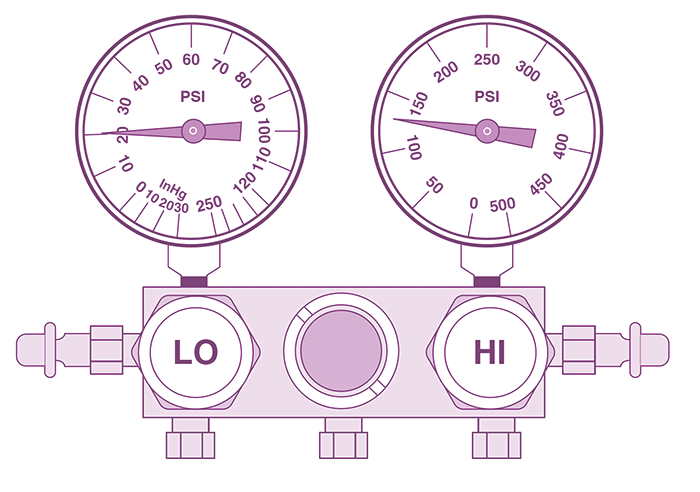
The airflow from the vents slows down after the vehicle has been driven for a while. The pressure gauges shown represent which most likely cause?
CorrectThe correct answer is D. An icing evaporator is the most likely cause to reduce the airflow and the heat load, which causes both low- and high-side pressures to be lower than normal. A fault in the temperature control is the most likely cause for the icing of the evaporator. Answer A is not correct because even though a low refrigerant level could cause both pressure gauges to read lower than normal, it would not cause the airflow to decrease after operating for a while. Answer B is not correct because even though a lack of airflow through the condenser would cause a lack of proper cooling, this condition would create an increase, rather than a decrease in high-pressure side and could not cause a decrease in airflow through the vents inside the vehicle. Answer C is not correct because even though a defective compressor could cause lower than normal pressure gauge readings, it could not cause a reduction in airflow through the vents.
IncorrectThe correct answer is D. An icing evaporator is the most likely cause to reduce the airflow and the heat load, which causes both low- and high-side pressures to be lower than normal. A fault in the temperature control is the most likely cause for the icing of the evaporator. Answer A is not correct because even though a low refrigerant level could cause both pressure gauges to read lower than normal, it would not cause the airflow to decrease after operating for a while. Answer B is not correct because even though a lack of airflow through the condenser would cause a lack of proper cooling, this condition would create an increase, rather than a decrease in high-pressure side and could not cause a decrease in airflow through the vents inside the vehicle. Answer C is not correct because even though a defective compressor could cause lower than normal pressure gauge readings, it could not cause a reduction in airflow through the vents.
-
Question 50 of 92
50. Question
Category: Heating, Ventilation, A/C (HVAC) and Engine Cooling System Service, Diagnosis, and Repair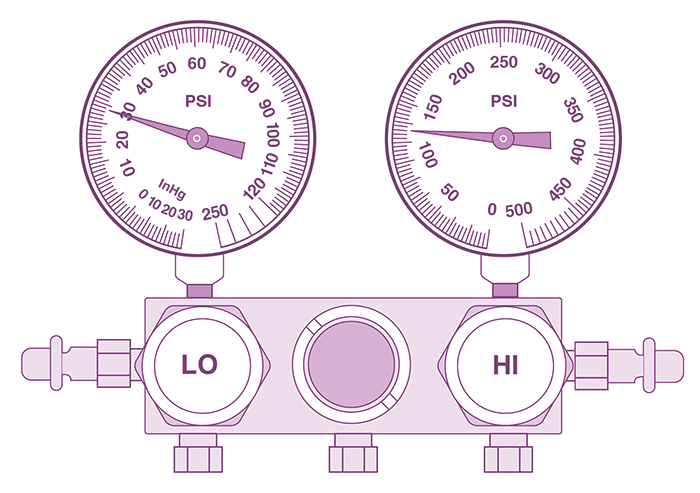
The A/C discharge air temperature is warm. The pressure gauges shown represent which most likely cause?
CorrectThe correct answer is B. A restricted liquid line or a low refrigerant charge can cause this symptom and gauge readings, due to the fact that an inadequate amount of refrigerant is being metered into the evaporator. Answer A is not correct because the pressure gauge readings are too low if the system were overcharged. Answer C is not correct because the pressure gauge readings would be higher than normal, rather than lower than normal if there were a lack of proper airflow through the condenser. Answer D is not correct because a defective compressor would cause a higher than normal low-side pressure reading, not a reading that is lower than normal.
IncorrectThe correct answer is B. A restricted liquid line or a low refrigerant charge can cause this symptom and gauge readings, due to the fact that an inadequate amount of refrigerant is being metered into the evaporator. Answer A is not correct because the pressure gauge readings are too low if the system were overcharged. Answer C is not correct because the pressure gauge readings would be higher than normal, rather than lower than normal if there were a lack of proper airflow through the condenser. Answer D is not correct because a defective compressor would cause a higher than normal low-side pressure reading, not a reading that is lower than normal.
-
Question 51 of 92
51. Question
Category: Heating, Ventilation, A/C (HVAC) and Engine Cooling System Service, Diagnosis, and RepairA customer states that the vehicle A/C does not cool as well as it should. Technician A says that the system could be low on charge. Technician B says that if the electric radiator cooling fan is not functioning, this can cause a lack of cooling inside the vehicle. Which Technician is correct?
CorrectThe correct answer is C. Both Technicians are correct. Technician A is correct because if the system is partially charged (low on refrigerant), the cooling capacity is reduced and the system will not be able to properly cool the vehicle. Technician B is correct because if the cooling fan is not functioning, the condenser may not be able to dissipate the heat resulting in higher pressures and temperatures in the system and reduced cooling, especially in slow city-type driving conditions. Answers A, B, and D are not correct because both Technicians are correct.
IncorrectThe correct answer is C. Both Technicians are correct. Technician A is correct because if the system is partially charged (low on refrigerant), the cooling capacity is reduced and the system will not be able to properly cool the vehicle. Technician B is correct because if the cooling fan is not functioning, the condenser may not be able to dissipate the heat resulting in higher pressures and temperatures in the system and reduced cooling, especially in slow city-type driving conditions. Answers A, B, and D are not correct because both Technicians are correct.
-
Question 52 of 92
52. Question
Category: Heating, Ventilation, A/C (HVAC) and Engine Cooling System Service, Diagnosis, and RepairTechnician A says that the low-side pressure of the air conditioning system is best checked for leaks with the engine off. Technician B says that the low side of the system is best checked for leaks when the engine is on, and the system is operating. Which Technician is correct?
CorrectThe correct answer is A. Technician A is correct because when the engine is off, the compressor stops and the high and low pressure in the system become equalized. This means that both the high-side pressure and the low-side pressure will be 70 psi at 70ºF (21ºC). Because the low-side increases (from normal of about 30 psi to 70 psi with the system off), it is more likely for leaks to be detected due to the higher pressure. Technician B is not correct because while the high side is best checked with the engine running and the system in operation, the low side is best checked with the engine off. Answers C and D are not correct because Technician A only is correct.
IncorrectThe correct answer is A. Technician A is correct because when the engine is off, the compressor stops and the high and low pressure in the system become equalized. This means that both the high-side pressure and the low-side pressure will be 70 psi at 70ºF (21ºC). Because the low-side increases (from normal of about 30 psi to 70 psi with the system off), it is more likely for leaks to be detected due to the higher pressure. Technician B is not correct because while the high side is best checked with the engine running and the system in operation, the low side is best checked with the engine off. Answers C and D are not correct because Technician A only is correct.
-
Question 53 of 92
53. Question
Category: Heating, Ventilation, A/C (HVAC) and Engine Cooling System Service, Diagnosis, and RepairBoth the low and the high pressures are within normal ranges, yet the inside of the vehicle is not cooling. Technician A says that a partially clogged orifice tube could be the cause. Technician B says that too much refrigerant oil in the system could be the cause. Which Technician is correct?
CorrectThe correct answer is B. Technician B is correct because oil displaces refrigerant and even though the pressures are within the normal range, a lack of cooling will occur if excessive refrigerant oil has been installed in the system because the oil acts as an insulator on the inside of the evaporator and condenser. Technician A is not correct because even though a partially clogged orifice tube will likely cause the lack of proper cooling, the high-side pressure will be lower than normal (not normal as stated) due to the lack of refrigerant flow through the compressor due to the restriction. Answers C and D are not correct because Technician B only is correct.
IncorrectThe correct answer is B. Technician B is correct because oil displaces refrigerant and even though the pressures are within the normal range, a lack of cooling will occur if excessive refrigerant oil has been installed in the system because the oil acts as an insulator on the inside of the evaporator and condenser. Technician A is not correct because even though a partially clogged orifice tube will likely cause the lack of proper cooling, the high-side pressure will be lower than normal (not normal as stated) due to the lack of refrigerant flow through the compressor due to the restriction. Answers C and D are not correct because Technician B only is correct.
-
Question 54 of 92
54. Question
Category: Heating, Ventilation, A/C (HVAC) and Engine Cooling System Service, Diagnosis, and RepairThe procedure that should be used when refilling an empty cooling system includes the following: ______________.
CorrectThe correct answer is A. Most vehicle manufacturers recommend that a 50/50 mix of antifreeze and water be used for the cooling system. Filling half the system with 100% antifreeze and the rest with water will result in a 50/50 mix. Answers B and C are incorrect because these methods will not result in a 50/50 antifreeze to water mix. Answer D will result in a 50/50 mix if all of the coolant can be drained from the system before refilling it with the 50/50 mix. However, this method uses more antifreeze coolant than is necessary and therefore is not the recommended method and not the best answer to this question.
IncorrectThe correct answer is A. Most vehicle manufacturers recommend that a 50/50 mix of antifreeze and water be used for the cooling system. Filling half the system with 100% antifreeze and the rest with water will result in a 50/50 mix. Answers B and C are incorrect because these methods will not result in a 50/50 antifreeze to water mix. Answer D will result in a 50/50 mix if all of the coolant can be drained from the system before refilling it with the 50/50 mix. However, this method uses more antifreeze coolant than is necessary and therefore is not the recommended method and not the best answer to this question.
-
Question 55 of 92
55. Question
Category: Heating, Ventilation, A/C (HVAC) and Engine Cooling System Service, Diagnosis, and RepairA common location for the A/C cabin filter is ____________.
CorrectThe correct answer is D. A cabin filter is used in the heating, ventilation, and air-conditioning (HVAC) system to filter the outside air drawn into the passenger compartment. The cabin air filter can be accessed from under the hood at the cowl (bulkhead) or under the dash, usually behind the glove compartment. The filter is not near the engine air filter, the passenger kick panel, or behind the instrument cluster.
IncorrectThe correct answer is D. A cabin filter is used in the heating, ventilation, and air-conditioning (HVAC) system to filter the outside air drawn into the passenger compartment. The cabin air filter can be accessed from under the hood at the cowl (bulkhead) or under the dash, usually behind the glove compartment. The filter is not near the engine air filter, the passenger kick panel, or behind the instrument cluster.
-
Question 56 of 92
56. Question
Category: Heating, Ventilation, A/C (HVAC) and Engine Cooling System Service, Diagnosis, and RepairWhen diagnosing an A/C concern how does the technician access HVAC-related diagnostic trouble codes (DTCs)?
CorrectThe correct answer is B. To get access to the codes set for most of the HVAC-related faults requires the use of a factory scan tool or an enhanced factory-level after- market scan tool. Many HVAC systems are controlled by the body control module (BCM). The air-conditioning-related diagnostic trouble codes are usually found under “Body” or “Chassis” and if set, will not light the “check engine” warning light. Answer A is incorrect because a global or generic scan tool that can read only “P” codes is not suitable for diagnosing an HVAC system. A DMM or oscilloscope cannot read DTCs.
IncorrectThe correct answer is B. To get access to the codes set for most of the HVAC-related faults requires the use of a factory scan tool or an enhanced factory-level after- market scan tool. Many HVAC systems are controlled by the body control module (BCM). The air-conditioning-related diagnostic trouble codes are usually found under “Body” or “Chassis” and if set, will not light the “check engine” warning light. Answer A is incorrect because a global or generic scan tool that can read only “P” codes is not suitable for diagnosing an HVAC system. A DMM or oscilloscope cannot read DTCs.
-
Question 57 of 92
57. Question
Category: Heating, Ventilation, A/C (HVAC) and Engine Cooling System Service, Diagnosis, and RepairWhen servicing a vehicle air conditioning system, the best source of technical information is ____________.
CorrectThe correct answer is B. The most comprehensive and accurate service information is the service information from the vehicle manufacturer. This information is available for most, if not all, vehicles and can be purchased from their website. While they are sources of information, magazines, the Internet, or refrigerant manufacturers are not the best source if technical information for the vehicle.
IncorrectThe correct answer is B. The most comprehensive and accurate service information is the service information from the vehicle manufacturer. This information is available for most, if not all, vehicles and can be purchased from their website. While they are sources of information, magazines, the Internet, or refrigerant manufacturers are not the best source if technical information for the vehicle.
-
Question 58 of 92
58. Question
Category: Heating, Ventilation, A/C (HVAC) and Engine Cooling System Service, Diagnosis, and RepairWhen servicing a hybrid vehicle A/C system, what service precaution is recommended by most manufacturers?
CorrectThe correct answer is D. Many manufacturers specify the separate or different air-conditioning service equipment for hybrid and electric vehicles that use an electric air-conditioning compressor. When the refrigerant is recovered from the system, typically small amounts of refrigerant oil are also removed from the system. To avoid cross contamination between PAG and POE oil, which might lead to an electric motor winding failure or a loss of isolation, separate air-conditioning recovery stations are specified. Answers A and B are wrong because these are not requirements when servicing hybrid HVAC systems. Answer C is incorrect because some hybrids use R-1234yf refrigerant.
IncorrectThe correct answer is D. Many manufacturers specify the separate or different air-conditioning service equipment for hybrid and electric vehicles that use an electric air-conditioning compressor. When the refrigerant is recovered from the system, typically small amounts of refrigerant oil are also removed from the system. To avoid cross contamination between PAG and POE oil, which might lead to an electric motor winding failure or a loss of isolation, separate air-conditioning recovery stations are specified. Answers A and B are wrong because these are not requirements when servicing hybrid HVAC systems. Answer C is incorrect because some hybrids use R-1234yf refrigerant.
-
Question 59 of 92
59. Question
Category: Heating, Ventilation, A/C (HVAC) and Engine Cooling System Service, Diagnosis, and RepairWhat refrigerant is required for automotive use starting in year 2021?
CorrectThe correct answer is B. Starting in the mid-2010s and required by 2021, HFO-1234yf (R-1234yf) refrigerant is used in all recent vehicles. It has a lower impact on climate change (global warming). Answer A, R-744 (carbon dioxide) is not commonly used or required. Answer C is incorrect because HFC-134a is replaced by R-1234yf according to regulations. D is wrong because only one answer is correct.
IncorrectThe correct answer is B. Starting in the mid-2010s and required by 2021, HFO-1234yf (R-1234yf) refrigerant is used in all recent vehicles. It has a lower impact on climate change (global warming). Answer A, R-744 (carbon dioxide) is not commonly used or required. Answer C is incorrect because HFC-134a is replaced by R-1234yf according to regulations. D is wrong because only one answer is correct.
-
Question 60 of 92
60. Question
Category: Heating, Ventilation, A/C (HVAC) and Engine Cooling System Service, Diagnosis, and RepairWhat is a characteristic of R-1234yf that other refrigerants do not have?
CorrectThe correct answer is D. R-1234yf is mildly flammable. As a result of the possibility of being ignited, the following precautions need to be followed when servicing an R-1234yf system: 1. Do not smoke or have an open flame while working on or servicing a vehicle equipped with R-1234yf. 2. Use tools and service equipment designed specifically for R-1234yf. Answer A is incorrect because R-1234yf is much more expensive that other refrigerants. Answers B and C are incorrect because these are not characteristics of R-1234yf refrigerant.
IncorrectThe correct answer is D. R-1234yf is mildly flammable. As a result of the possibility of being ignited, the following precautions need to be followed when servicing an R-1234yf system: 1. Do not smoke or have an open flame while working on or servicing a vehicle equipped with R-1234yf. 2. Use tools and service equipment designed specifically for R-1234yf. Answer A is incorrect because R-1234yf is much more expensive that other refrigerants. Answers B and C are incorrect because these are not characteristics of R-1234yf refrigerant.
-
Question 61 of 92
61. Question
Category: Heating, Ventilation, A/C (HVAC) and Engine Cooling System Service, Diagnosis, and Repair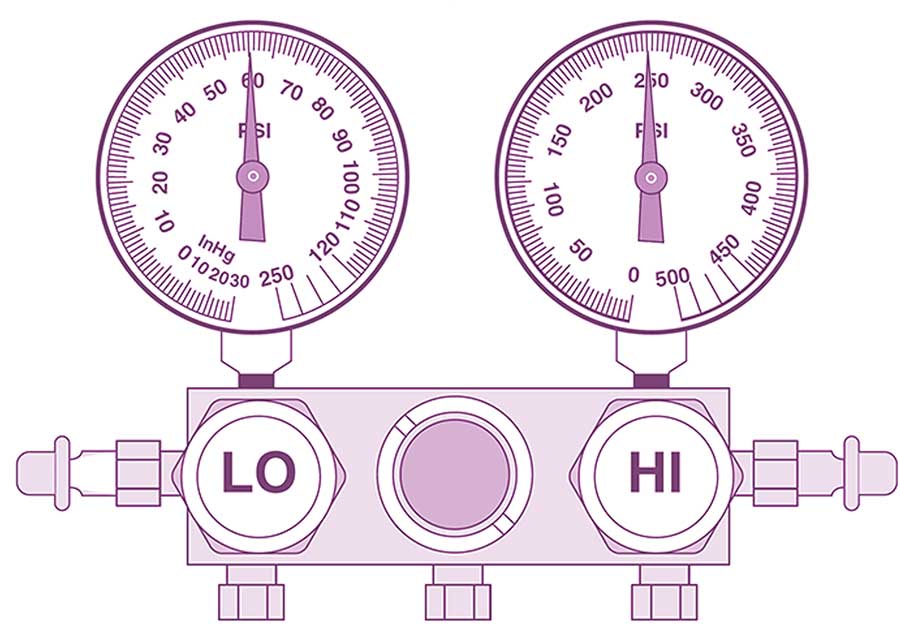
The discharge air temperature is cool with higher than normal low side pressure along with excess high side pressure. Which represents the most likely cause?
CorrectThe correct answer is C. Excess refrigerant is the most likely cause of higher than normal low-side pressure gauge reading with a higher than normal high side pressure reading. Too much refrigerant is being metered into the evaporator or the compressor is not pulling it out, which can occur on some systems that use a variable-displacement compressor. Answer A is not correct because a low refrigerant charge would cause the discharge air to be warm and both gauge pressure readings below normal. Answer B is not correct because a clogged condensate drain would cause water to overflow the evaporator housing and flow onto the floor of the vehicle and would not create higher than normal pressure on the low-side gauge. Answer D is not correct because a lack of airflow through the condenser would cause a higher than normal high-side pressure reading and not a higher than normal low-side pressure reading.
IncorrectThe correct answer is C. Excess refrigerant is the most likely cause of higher than normal low-side pressure gauge reading with a higher than normal high side pressure reading. Too much refrigerant is being metered into the evaporator or the compressor is not pulling it out, which can occur on some systems that use a variable-displacement compressor. Answer A is not correct because a low refrigerant charge would cause the discharge air to be warm and both gauge pressure readings below normal. Answer B is not correct because a clogged condensate drain would cause water to overflow the evaporator housing and flow onto the floor of the vehicle and would not create higher than normal pressure on the low-side gauge. Answer D is not correct because a lack of airflow through the condenser would cause a higher than normal high-side pressure reading and not a higher than normal low-side pressure reading.
-
Question 62 of 92
62. Question
Category: Heating, Ventilation, A/C (HVAC) and Engine Cooling System Service, Diagnosis, and Repair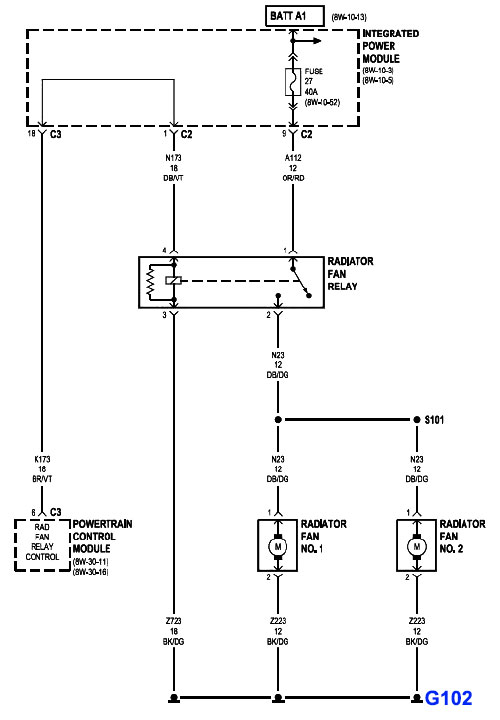
A radiator has just been reinstalled and the technician forgot to connect G102. Technician A says that the cooling fans will not run. Technician B says that the relay will not click when commanded by the PCM. Which Technician is correct?
CorrectThe correct answer is C. Both Technicians are correct. Technician A is correct because G102 provides the ground for both fan motors. Technician B is correct because G102 also provides ground for the relay coil. Answers A, B, and D are not correct because both Technicians are correct.
IncorrectThe correct answer is C. Both Technicians are correct. Technician A is correct because G102 provides the ground for both fan motors. Technician B is correct because G102 also provides ground for the relay coil. Answers A, B, and D are not correct because both Technicians are correct.
-
Question 63 of 92
63. Question
Category: Heating, Ventilation, A/C (HVAC) and Engine Cooling System Service, Diagnosis, and RepairWhen charging an A/C system with refrigerant, how does the technician know how much refrigerant to add?
Correct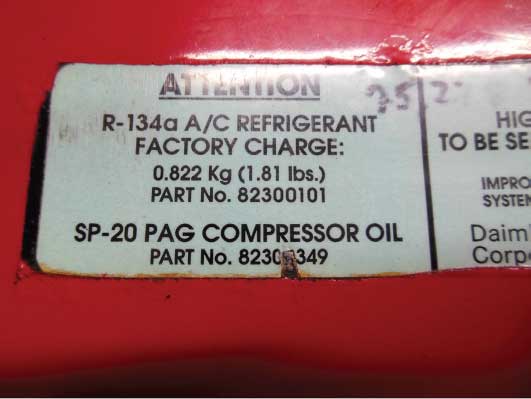
The correct answer is C. Charge level is system specific, and as the volume of HVAC systems has been downsized, the amount of refrigerant has become critical. The charge level is normally found on a specification decal fastened to some location under the hood and includes both the type and volume of refrigerant used. Condenser size does not indicate charge amount. Answer B is wrong because gauge readings can vary according to ambient temperature and shop conditions. Answer D is incorrect because this information is not normally found on the door placard.
IncorrectThe correct answer is C. Charge level is system specific, and as the volume of HVAC systems has been downsized, the amount of refrigerant has become critical. The charge level is normally found on a specification decal fastened to some location under the hood and includes both the type and volume of refrigerant used. Condenser size does not indicate charge amount. Answer B is wrong because gauge readings can vary according to ambient temperature and shop conditions. Answer D is incorrect because this information is not normally found on the door placard.
-
Question 64 of 92
64. Question
Category: Heating, Ventilation, A/C (HVAC) and Engine Cooling System Service, Diagnosis, and RepairAs standards are tightened concerning refrigerants, many of the steps for evacuating and recharging systems are built into the software of the RRR machine. When charging a R-1234yf A/C system, what will the RRR machine do if it detects a leak?
CorrectThe correct answer is A. If the systems passed the vacuum test, the RRR machine will automatically add a small refrigerant charge to the system equal to about 10% of the capacity of the system and then monitors the system pressure for 5 minutes. If the pressure decreases by 10% or more, this indicates a leak is present and the machine will not add more refrigerant. Answers B and C are not correct because the machine is not programmed to do these actions. D is incorrect because at least one answer is correct.
IncorrectThe correct answer is A. If the systems passed the vacuum test, the RRR machine will automatically add a small refrigerant charge to the system equal to about 10% of the capacity of the system and then monitors the system pressure for 5 minutes. If the pressure decreases by 10% or more, this indicates a leak is present and the machine will not add more refrigerant. Answers B and C are not correct because the machine is not programmed to do these actions. D is incorrect because at least one answer is correct.
-
Question 65 of 92
65. Question
Category: Heating, Ventilation, A/C (HVAC) and Engine Cooling System Service, Diagnosis, and Repair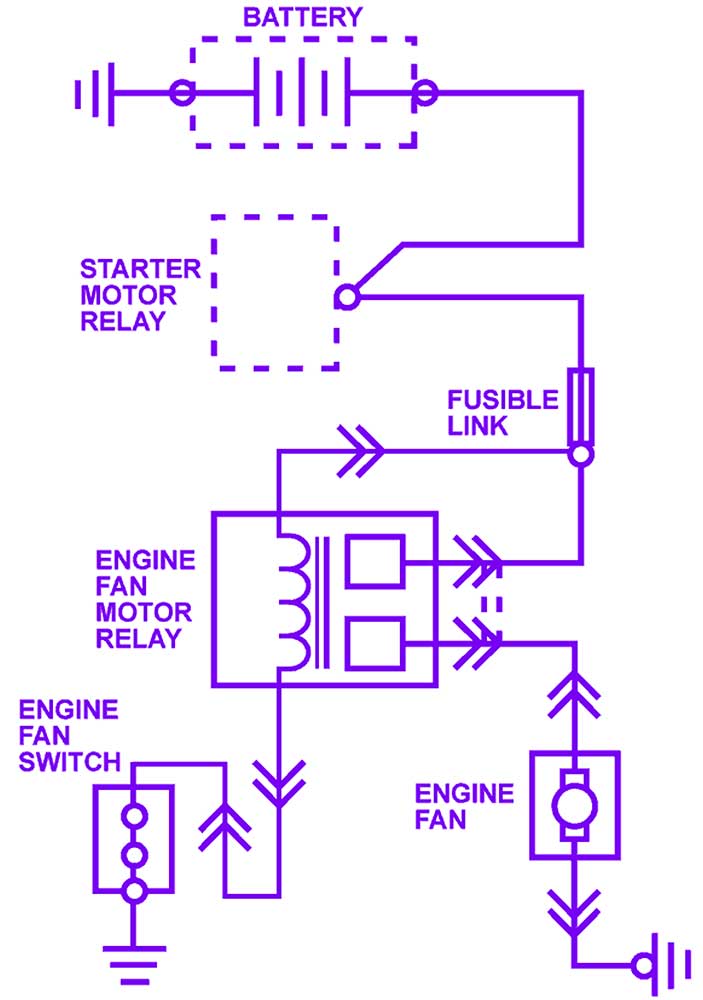
The engine cooling fan does not operate. Technician A says a blown fusible link could be the cause. Technician B says that a defective engine fan relay could be the cause. Which Technician is correct?
CorrectThe correct answer is C. Both Technicians are correct. Technician A is correct because a blown fusible link could prevent electrical power from reaching the blower motor. Technician B says that a defective engine fan relay could prevent power from reaching the fan motor. Answers A, B, and D are not correct because both Technicians are correct.
IncorrectThe correct answer is C. Both Technicians are correct. Technician A is correct because a blown fusible link could prevent electrical power from reaching the blower motor. Technician B says that a defective engine fan relay could prevent power from reaching the fan motor. Answers A, B, and D are not correct because both Technicians are correct.
-
Question 66 of 92
66. Question
Category: Heating, Ventilation, A/C (HVAC) and Engine Cooling System Service, Diagnosis, and RepairWhich of the following statements about automotive air conditioning (A/C) systems is NOT correct?
CorrectThe correct answer is A. Variable displacement compressors always operate at full capacity regardless of cooling demand: This statement is incorrect because variable displacement compressors adjust their displacement to match the cooling demand. They do not always operate at full capacity. Instead, they vary the amount of refrigerant being compressed to maintain the desired temperature efficiently, which improves fuel economy and system performance.
Incorrect Answers:
Answer B: Orifice tube systems use a fixed orifice to regulate refrigerant flow into the evaporator: This statement is correct. In orifice tube A/C systems, a fixed orifice tube regulates the flow of refrigerant into the evaporator. The orifice creates a pressure drop, causing the refrigerant to expand and cool as it enters the evaporator.
Answer C: Thermal expansion valve (TXV) systems adjust refrigerant flow based on evaporator temperature: This statement is correct. TXV systems use a thermal expansion valve to regulate the flow of refrigerant into the evaporator based on the temperature of the evaporator. This allows for more precise control of the refrigerant flow, leading to more efficient cooling and better performance under varying conditions.
Answer D: Dual-zone A/C systems allow different temperature settings for the driver and passenger sides: This statement is correct. Dual-zone A/C systems provide separate temperature controls for the driver and passenger sides, allowing each occupant to set their preferred temperature independently. This enhances comfort by accommodating individual preferences within the same vehicle.
IncorrectThe correct answer is A. Variable displacement compressors always operate at full capacity regardless of cooling demand: This statement is incorrect because variable displacement compressors adjust their displacement to match the cooling demand. They do not always operate at full capacity. Instead, they vary the amount of refrigerant being compressed to maintain the desired temperature efficiently, which improves fuel economy and system performance.
Incorrect Answers:
Answer B: Orifice tube systems use a fixed orifice to regulate refrigerant flow into the evaporator: This statement is correct. In orifice tube A/C systems, a fixed orifice tube regulates the flow of refrigerant into the evaporator. The orifice creates a pressure drop, causing the refrigerant to expand and cool as it enters the evaporator.
Answer C: Thermal expansion valve (TXV) systems adjust refrigerant flow based on evaporator temperature: This statement is correct. TXV systems use a thermal expansion valve to regulate the flow of refrigerant into the evaporator based on the temperature of the evaporator. This allows for more precise control of the refrigerant flow, leading to more efficient cooling and better performance under varying conditions.
Answer D: Dual-zone A/C systems allow different temperature settings for the driver and passenger sides: This statement is correct. Dual-zone A/C systems provide separate temperature controls for the driver and passenger sides, allowing each occupant to set their preferred temperature independently. This enhances comfort by accommodating individual preferences within the same vehicle.
-
Question 67 of 92
67. Question
Category: Heating, Ventilation, A/C (HVAC) and Engine Cooling System Service, Diagnosis, and RepairA vehicle’s air conditioning (A/C) system emits a musty smell when turned on. Which of these could be the cause?
CorrectThe correct answer is B. The musty smell coming from the A/C system is most often caused by mold or mildew growth within the evaporator core. The evaporator is a moist, dark environment, making it an ideal breeding ground for mold and mildew. When the A/C is turned on, air passes over the evaporator core, carrying the mold or mildew smell into the cabin. Cleaning the evaporator core and ensuring proper drainage can eliminate this odor.
Incorrect Answers:
Answer A: While a refrigerant leak can cause a chemical smell, it would not typically result in a musty odor. Refrigerant leaks are more likely to produce a sweet or chloroform-like smell and would be accompanied by a decrease in cooling performance. Therefore, it is not the correct cause for a musty smell specifically.
Answer C: A clogged cabin air filter can restrict airflow and potentially lead to unpleasant smells, but it is less likely to cause a musty odor. The filter itself may become dirty and introduce some odors, but the musty smell is more directly associated with mold or mildew within the evaporator core. Replacing the cabin air filter is a good maintenance practice but would not address the underlying cause of the musty smell.
Answer D: A failing A/C compressor can cause mechanical noise and reduced cooling performance, but it would not be a source of musty smells. Compressor issues are generally related to the mechanical operation of the A/C system and do not produce the type of odor described. The musty smell is more likely due to biological growth within the system, specifically in the evaporator core.
IncorrectThe correct answer is B. The musty smell coming from the A/C system is most often caused by mold or mildew growth within the evaporator core. The evaporator is a moist, dark environment, making it an ideal breeding ground for mold and mildew. When the A/C is turned on, air passes over the evaporator core, carrying the mold or mildew smell into the cabin. Cleaning the evaporator core and ensuring proper drainage can eliminate this odor.
Incorrect Answers:
Answer A: While a refrigerant leak can cause a chemical smell, it would not typically result in a musty odor. Refrigerant leaks are more likely to produce a sweet or chloroform-like smell and would be accompanied by a decrease in cooling performance. Therefore, it is not the correct cause for a musty smell specifically.
Answer C: A clogged cabin air filter can restrict airflow and potentially lead to unpleasant smells, but it is less likely to cause a musty odor. The filter itself may become dirty and introduce some odors, but the musty smell is more directly associated with mold or mildew within the evaporator core. Replacing the cabin air filter is a good maintenance practice but would not address the underlying cause of the musty smell.
Answer D: A failing A/C compressor can cause mechanical noise and reduced cooling performance, but it would not be a source of musty smells. Compressor issues are generally related to the mechanical operation of the A/C system and do not produce the type of odor described. The musty smell is more likely due to biological growth within the system, specifically in the evaporator core.
-
Question 68 of 92
68. Question
Category: Heating, Ventilation, A/C (HVAC) and Engine Cooling System Service, Diagnosis, and RepairAn air conditioning (A/C) system produces a high-pitched squealing noise when the A/C is turned on. Which of these could be the cause?
CorrectThe correct answer is C. A high-pitched squealing noise when the A/C is turned on is often caused by a worn or slipping serpentine belt. The serpentine belt drives the A/C compressor, and if it is worn or not properly tensioned, it can slip on the pulleys, causing a squealing noise. Inspecting the belt for wear and proper tension, and replacing it if necessary, can resolve this issue.
Incorrect Answers:
Answer A: A clogged expansion valve can cause issues with the cooling performance of the A/C system, leading to symptoms like poor cooling or fluctuating temperatures. However, it is unlikely to produce a high-pitched squealing noise. The expansion valve regulates the flow of refrigerant into the evaporator but does not typically cause noise when malfunctioning.
Answer B: A low refrigerant level can cause the A/C system to perform poorly and might lead to compressor noise due to increased strain, but it generally does not cause a high-pitched squealing noise. Low refrigerant levels usually result in hissing or bubbling sounds, particularly near the evaporator or compressor, but not a squeal.
Answer D: A malfunctioning blower motor can cause noise, but it would be more likely to produce a grinding or rattling sound rather than a high-pitched squeal. The blower motor is responsible for circulating air through the HVAC system, and its noise issues are typically related to its bearings or fan assembly rather than the type of noise described.
IncorrectThe correct answer is C. A high-pitched squealing noise when the A/C is turned on is often caused by a worn or slipping serpentine belt. The serpentine belt drives the A/C compressor, and if it is worn or not properly tensioned, it can slip on the pulleys, causing a squealing noise. Inspecting the belt for wear and proper tension, and replacing it if necessary, can resolve this issue.
Incorrect Answers:
Answer A: A clogged expansion valve can cause issues with the cooling performance of the A/C system, leading to symptoms like poor cooling or fluctuating temperatures. However, it is unlikely to produce a high-pitched squealing noise. The expansion valve regulates the flow of refrigerant into the evaporator but does not typically cause noise when malfunctioning.
Answer B: A low refrigerant level can cause the A/C system to perform poorly and might lead to compressor noise due to increased strain, but it generally does not cause a high-pitched squealing noise. Low refrigerant levels usually result in hissing or bubbling sounds, particularly near the evaporator or compressor, but not a squeal.
Answer D: A malfunctioning blower motor can cause noise, but it would be more likely to produce a grinding or rattling sound rather than a high-pitched squeal. The blower motor is responsible for circulating air through the HVAC system, and its noise issues are typically related to its bearings or fan assembly rather than the type of noise described.
-
Question 69 of 92
69. Question
Category: Heating, Ventilation, A/C (HVAC) and Engine Cooling System Service, Diagnosis, and RepairWhen evacuating an A/C system, Technician A says that a technician should connect the vacuum pump to the service ports and run it for at least 30 minutes. Technician B says that a technician should close the service valves on the manifold gauge set immediately after starting the vacuum pump. Who is right?
CorrectThe correct answer is A. Technician A is correct because, when evacuating an A/C system, it is essential to connect the vacuum pump to the service ports and run it for at least 30 minutes to ensure that all moisture and air are removed from the system. The vacuum pump creates a low-pressure environment, which helps to boil off any moisture within the system and removes air, which can cause poor cooling performance and potential damage to the components if left inside.
Incorrect Answers:
Answer B: Technician B is incorrect because you should not close the service valves on the manifold gauge set immediately after starting the vacuum pump. Doing so would prevent the vacuum from being applied to the entire system, which defeats the purpose of evacuating the system. The service valves should remain open to allow the vacuum to draw out all air and moisture from the A/C system.
Answer C: This answer is incorrect because, while Technician A’s statement is correct, Technician B’s statement is incorrect. Closing the service valves immediately after starting the vacuum pump would prevent proper evacuation of the A/C system.
Answer D: This answer is incorrect because Technician A’s statement is correct. Proper evacuation of an A/C system involves running the vacuum pump for at least 30 minutes with the service valves open to ensure all air and moisture are removed. Technician B’s incorrect procedure would prevent effective evacuation.
IncorrectThe correct answer is A. Technician A is correct because, when evacuating an A/C system, it is essential to connect the vacuum pump to the service ports and run it for at least 30 minutes to ensure that all moisture and air are removed from the system. The vacuum pump creates a low-pressure environment, which helps to boil off any moisture within the system and removes air, which can cause poor cooling performance and potential damage to the components if left inside.
Incorrect Answers:
Answer B: Technician B is incorrect because you should not close the service valves on the manifold gauge set immediately after starting the vacuum pump. Doing so would prevent the vacuum from being applied to the entire system, which defeats the purpose of evacuating the system. The service valves should remain open to allow the vacuum to draw out all air and moisture from the A/C system.
Answer C: This answer is incorrect because, while Technician A’s statement is correct, Technician B’s statement is incorrect. Closing the service valves immediately after starting the vacuum pump would prevent proper evacuation of the A/C system.
Answer D: This answer is incorrect because Technician A’s statement is correct. Proper evacuation of an A/C system involves running the vacuum pump for at least 30 minutes with the service valves open to ensure all air and moisture are removed. Technician B’s incorrect procedure would prevent effective evacuation.
-
Question 70 of 92
70. Question
Category: Heating, Ventilation, A/C (HVAC) and Engine Cooling System Service, Diagnosis, and RepairWhen charging an A/C system with refrigerant, Technician A says that you should add the refrigerant through the high-pressure service port. Technician B says that you should use the low-pressure service port while monitoring the system pressures. Who is right?
CorrectThe correct answer is B: Technician B is correct because refrigerant should always be added through the low-pressure service port. Charging through the low-pressure side allows the refrigerant to be drawn into the system safely and ensures proper mixing and distribution within the A/C system. Additionally, monitoring the system pressures during charging is essential to prevent overcharging and to verify that the system is operating within the manufacturer’s specified pressure range.
Incorrect Answers:
Answer A: Technician A is incorrect because adding refrigerant through the high-pressure service port is unsafe and can cause damage to the system. The high-pressure side of the system operates at much higher pressures, and attempting to add refrigerant through this port can result in an explosion or serious injury due to the high-pressure release of refrigerant.
Answer C: This answer is incorrect because, while Technician B is correct, Technician A is not. Adding refrigerant through the high-pressure port is dangerous and not the correct procedure.
Answer D: This answer is incorrect because Technician B’s statement is correct. Charging an A/C system should be done through the low-pressure service port while monitoring system pressures to ensure safe and accurate filling.
IncorrectThe correct answer is B: Technician B is correct because refrigerant should always be added through the low-pressure service port. Charging through the low-pressure side allows the refrigerant to be drawn into the system safely and ensures proper mixing and distribution within the A/C system. Additionally, monitoring the system pressures during charging is essential to prevent overcharging and to verify that the system is operating within the manufacturer’s specified pressure range.
Incorrect Answers:
Answer A: Technician A is incorrect because adding refrigerant through the high-pressure service port is unsafe and can cause damage to the system. The high-pressure side of the system operates at much higher pressures, and attempting to add refrigerant through this port can result in an explosion or serious injury due to the high-pressure release of refrigerant.
Answer C: This answer is incorrect because, while Technician B is correct, Technician A is not. Adding refrigerant through the high-pressure port is dangerous and not the correct procedure.
Answer D: This answer is incorrect because Technician B’s statement is correct. Charging an A/C system should be done through the low-pressure service port while monitoring system pressures to ensure safe and accurate filling.
-
Question 71 of 92
71. Question
Category: Heating, Ventilation, A/C (HVAC) and Engine Cooling System Service, Diagnosis, and RepairWhen disarming an airbag system before performing repairs, which of these steps is essential to ensure safety?
CorrectThe correct answer is D. The correct procedure for disarming an airbag system involves disconnecting the negative battery cable to cut off power to the vehicle’s electrical systems and waiting at least 10 minutes to ensure that any residual power in the airbag system’s capacitors is fully discharged. This waiting period is crucial because the airbag system can retain enough charge to deploy even after the battery is disconnected. Ensuring all power is drained helps prevent accidental deployment during repairs.
Incorrect Answers:
Answer A: While disconnecting the negative battery cable is part of the correct procedure, waiting only 5 minutes may not be sufficient to fully discharge the capacitors in the airbag system. This shorter wait time does not guarantee that the system is completely safe to work on, making it a less reliable method compared to the 10-minute wait time.
Answer B: Although removing the airbag fuse and disconnecting the airbag module connector can isolate the airbag system, this procedure alone does not address the need to fully discharge the capacitors. Disconnecting the battery and waiting the appropriate amount of time ensures that there is no stored energy that could cause accidental deployment.
Answer C: Disconnecting the positive battery cable is not the standard procedure for disarming an airbag system. Additionally, using a grounding strap is unnecessary and does not contribute to discharging the airbag system’s capacitors. The correct method involves disconnecting the negative battery cable, which is safer and more effective in preventing accidental airbag deployment.
IncorrectThe correct answer is D. The correct procedure for disarming an airbag system involves disconnecting the negative battery cable to cut off power to the vehicle’s electrical systems and waiting at least 10 minutes to ensure that any residual power in the airbag system’s capacitors is fully discharged. This waiting period is crucial because the airbag system can retain enough charge to deploy even after the battery is disconnected. Ensuring all power is drained helps prevent accidental deployment during repairs.
Incorrect Answers:
Answer A: While disconnecting the negative battery cable is part of the correct procedure, waiting only 5 minutes may not be sufficient to fully discharge the capacitors in the airbag system. This shorter wait time does not guarantee that the system is completely safe to work on, making it a less reliable method compared to the 10-minute wait time.
Answer B: Although removing the airbag fuse and disconnecting the airbag module connector can isolate the airbag system, this procedure alone does not address the need to fully discharge the capacitors. Disconnecting the battery and waiting the appropriate amount of time ensures that there is no stored energy that could cause accidental deployment.
Answer C: Disconnecting the positive battery cable is not the standard procedure for disarming an airbag system. Additionally, using a grounding strap is unnecessary and does not contribute to discharging the airbag system’s capacitors. The correct method involves disconnecting the negative battery cable, which is safer and more effective in preventing accidental airbag deployment.
-
Question 72 of 92
72. Question
Category: Heating, Ventilation, A/C (HVAC) and Engine Cooling System Service, Diagnosis, and RepairWhich of the following statements about automotive service bulletins (TSBs) is NOT correct?
CorrectThe correct answer is D. This statement is not correct because while service bulletins provide important information and recommendations from the vehicle manufacturer, they are not legally binding. Following TSBs is not a legal requirement, but it is highly recommended to ensure proper and efficient repairs based on the manufacturer’s findings and guidance.
Incorrect Answers:
Answer A: TSBs are issued to inform technicians about common issues and provide detailed instructions on how to address them, helping to ensure that the repairs are performed correctly and efficiently.
Answer B: TSBs are typically distributed by vehicle manufacturers to their network of dealerships and authorized repair facilities. This ensures that the people who are most likely to work on the affected vehicles have the necessary information.
Answer C: This statement is correct. TSBs usually contain comprehensive information, including diagnostic procedures, step-by-step repair instructions, and a list of parts required to perform the recommended fixes. This helps technicians accurately identify and resolve the issues covered in the bulletin.
IncorrectThe correct answer is D. This statement is not correct because while service bulletins provide important information and recommendations from the vehicle manufacturer, they are not legally binding. Following TSBs is not a legal requirement, but it is highly recommended to ensure proper and efficient repairs based on the manufacturer’s findings and guidance.
Incorrect Answers:
Answer A: TSBs are issued to inform technicians about common issues and provide detailed instructions on how to address them, helping to ensure that the repairs are performed correctly and efficiently.
Answer B: TSBs are typically distributed by vehicle manufacturers to their network of dealerships and authorized repair facilities. This ensures that the people who are most likely to work on the affected vehicles have the necessary information.
Answer C: This statement is correct. TSBs usually contain comprehensive information, including diagnostic procedures, step-by-step repair instructions, and a list of parts required to perform the recommended fixes. This helps technicians accurately identify and resolve the issues covered in the bulletin.
-
Question 73 of 92
73. Question
Category: Heating, Ventilation, A/C (HVAC) and Engine Cooling System Service, Diagnosis, and RepairWhich of the following statements about vehicle recall campaigns is NOT correct?
CorrectThe correct answer is A. This statement is not correct because recall campaigns are not always voluntary. While manufacturers may initiate recalls voluntarily, they can also be mandated by government safety agencies such as the National Highway Traffic Safety Administration (NHTSA) when a safety-related defect or non-compliance with safety standards is identified.
Incorrect Answers:
Answer B: Recall campaigns are specifically aimed at addressing issues that pose a risk to safety or that fail to meet safety standards set by regulatory agencies. The primary goal is to protect vehicle occupants and other road users.
Answer C: When a recall campaign is initiated, manufacturers are required to notify the owners of the affected vehicles. The necessary repairs or modifications are performed at no cost to the vehicle owners to ensure safety and compliance with standards.
Answer D: Government safety agencies like NHTSA have the authority to mandate recall campaigns when they identify safety-related defects or non-compliance issues. These agencies ensure that manufacturers address the defects to maintain vehicle safety standards.
IncorrectThe correct answer is A. This statement is not correct because recall campaigns are not always voluntary. While manufacturers may initiate recalls voluntarily, they can also be mandated by government safety agencies such as the National Highway Traffic Safety Administration (NHTSA) when a safety-related defect or non-compliance with safety standards is identified.
Incorrect Answers:
Answer B: Recall campaigns are specifically aimed at addressing issues that pose a risk to safety or that fail to meet safety standards set by regulatory agencies. The primary goal is to protect vehicle occupants and other road users.
Answer C: When a recall campaign is initiated, manufacturers are required to notify the owners of the affected vehicles. The necessary repairs or modifications are performed at no cost to the vehicle owners to ensure safety and compliance with standards.
Answer D: Government safety agencies like NHTSA have the authority to mandate recall campaigns when they identify safety-related defects or non-compliance issues. These agencies ensure that manufacturers address the defects to maintain vehicle safety standards.
-
Question 74 of 92
74. Question
Category: Heating, Ventilation, A/C (HVAC) and Engine Cooling System Service, Diagnosis, and RepairA technician is diagnosing an A/C system that intermittently fails to cool using a digital multimeter (DMM). The technician measures the voltage at the A/C compressor clutch coil and finds a fluctuating voltage reading. Which of these could be the cause?
CorrectThe correct answer is B. A loose ground connection can cause fluctuating voltage readings at the A/C compressor clutch coil because it results in an intermittent electrical connection. This can cause the compressor clutch to engage and disengage sporadically, leading to intermittent cooling. When the ground connection is loose, the voltage supply to the clutch coil is unstable, causing the fluctuating readings observed with the DMM.
Incorrect Answers:
Answer A: While a faulty A/C compressor clutch relay can cause issues with the compressor clutch not engaging, it typically results in a complete failure to engage rather than fluctuating voltage readings. If the relay were faulty, the voltage would likely be consistently low or absent rather than fluctuating.
Answer C: A defective A/C pressure switch can cause the A/C system to shut off if it sends incorrect pressure readings to the control unit. However, this issue would more likely cause the system to turn off and on based on the erroneous pressure readings, rather than causing fluctuating voltage at the compressor clutch coil. The voltage readings in this case would likely be more consistent (on or off) rather than fluctuating.
Answer D: A low refrigerant charge affects the cooling efficiency of the A/C system but does not directly cause fluctuating voltage readings at the compressor clutch coil. Low refrigerant would more commonly result in poor cooling performance or the system shutting off due to low pressure, but it would not cause intermittent voltage fluctuations at the clutch coil.
IncorrectThe correct answer is B. A loose ground connection can cause fluctuating voltage readings at the A/C compressor clutch coil because it results in an intermittent electrical connection. This can cause the compressor clutch to engage and disengage sporadically, leading to intermittent cooling. When the ground connection is loose, the voltage supply to the clutch coil is unstable, causing the fluctuating readings observed with the DMM.
Incorrect Answers:
Answer A: While a faulty A/C compressor clutch relay can cause issues with the compressor clutch not engaging, it typically results in a complete failure to engage rather than fluctuating voltage readings. If the relay were faulty, the voltage would likely be consistently low or absent rather than fluctuating.
Answer C: A defective A/C pressure switch can cause the A/C system to shut off if it sends incorrect pressure readings to the control unit. However, this issue would more likely cause the system to turn off and on based on the erroneous pressure readings, rather than causing fluctuating voltage at the compressor clutch coil. The voltage readings in this case would likely be more consistent (on or off) rather than fluctuating.
Answer D: A low refrigerant charge affects the cooling efficiency of the A/C system but does not directly cause fluctuating voltage readings at the compressor clutch coil. Low refrigerant would more commonly result in poor cooling performance or the system shutting off due to low pressure, but it would not cause intermittent voltage fluctuations at the clutch coil.
-
Question 75 of 92
75. Question
Category: Heating, Ventilation, A/C (HVAC) and Engine Cooling System Service, Diagnosis, and RepairHow should a technician check for engine coolant electrolysis?
CorrectThe correct answer is D. The correct method to check for engine coolant electrolysis is by using a digital voltmeter. Electrolysis occurs when electrical currents pass through the coolant, which can lead to corrosion and other issues within the cooling system. To check for electrolysis, a technician should:
- Ensure the engine is off.
- Remove the radiator cap or coolant reservoir cap.
- Set the digital voltmeter to a low DC voltage setting (usually under 20V).
- Place the negative lead of the voltmeter on the battery negative terminal.
- Insert the positive lead into the coolant without touching the radiator or reservoir. If the reading is above 0.3 volts, it indicates the presence of electrolysis, and further investigation is necessary.
Incorrect Answers:
Answer A: A hydrometer is used to measure the specific gravity of the coolant, which indicates its density and concentration of antifreeze. This test helps determine the coolant’s effectiveness in preventing freezing and overheating but does not detect the presence of electrolysis.
Answer B: A refractometer measures the freezing point and boiling point of the coolant. This tool helps in ensuring the coolant mixture is appropriate for the operating environment but does not detect electrical currents or electrolysis within the coolant.
Answer C: While a visual inspection of the coolant can help identify contamination, rust, or debris, it cannot detect the presence of electrolysis. Visual inspection is a good maintenance practice but not sufficient for diagnosing electrolysis issues.
IncorrectThe correct answer is D. The correct method to check for engine coolant electrolysis is by using a digital voltmeter. Electrolysis occurs when electrical currents pass through the coolant, which can lead to corrosion and other issues within the cooling system. To check for electrolysis, a technician should:
- Ensure the engine is off.
- Remove the radiator cap or coolant reservoir cap.
- Set the digital voltmeter to a low DC voltage setting (usually under 20V).
- Place the negative lead of the voltmeter on the battery negative terminal.
- Insert the positive lead into the coolant without touching the radiator or reservoir. If the reading is above 0.3 volts, it indicates the presence of electrolysis, and further investigation is necessary.
Incorrect Answers:
Answer A: A hydrometer is used to measure the specific gravity of the coolant, which indicates its density and concentration of antifreeze. This test helps determine the coolant’s effectiveness in preventing freezing and overheating but does not detect the presence of electrolysis.
Answer B: A refractometer measures the freezing point and boiling point of the coolant. This tool helps in ensuring the coolant mixture is appropriate for the operating environment but does not detect electrical currents or electrolysis within the coolant.
Answer C: While a visual inspection of the coolant can help identify contamination, rust, or debris, it cannot detect the presence of electrolysis. Visual inspection is a good maintenance practice but not sufficient for diagnosing electrolysis issues.
-
Question 76 of 92
76. Question
Category: Heating, Ventilation, A/C (HVAC) and Engine Cooling System Service, Diagnosis, and RepairHow should a technician check engine coolant for contamination?
CorrectThe correct answer is A. The most straightforward and effective initial method to check for coolant contamination is a visual inspection. Contaminated coolant can often be identified by:
Discoloration: Coolant that has changed color from its original hue may indicate rust, corrosion, or chemical breakdown.
Debris: Particulate matter or sludge floating in the coolant can suggest contamination from engine materials or external sources.
Oil presence: A milky appearance or oil floating on the surface indicates oil contamination, often from a blown head gasket or other engine failure.
Incorrect Answers:
Answer B: While using a digital voltmeter to measure the voltage in the coolant can detect electrolysis (which is a sign of electrical issues causing corrosion), it does not directly identify contamination such as oil, rust, or other debris.
Answer B: A refractometer measures the freezing and boiling points of the coolant, ensuring it is properly mixed and effective for temperature extremes. However, it does not provide information on the presence of contaminants like oil or debris in the coolant.
Answer D: Testing the coolant’s pH level can indicate if the coolant is becoming acidic or alkaline, which can lead to corrosion and other problems. However, this method does not identify physical contaminants like oil, metal particles, or other debris within the coolant.
IncorrectThe correct answer is A. The most straightforward and effective initial method to check for coolant contamination is a visual inspection. Contaminated coolant can often be identified by:
Discoloration: Coolant that has changed color from its original hue may indicate rust, corrosion, or chemical breakdown.
Debris: Particulate matter or sludge floating in the coolant can suggest contamination from engine materials or external sources.
Oil presence: A milky appearance or oil floating on the surface indicates oil contamination, often from a blown head gasket or other engine failure.
Incorrect Answers:
Answer B: While using a digital voltmeter to measure the voltage in the coolant can detect electrolysis (which is a sign of electrical issues causing corrosion), it does not directly identify contamination such as oil, rust, or other debris.
Answer B: A refractometer measures the freezing and boiling points of the coolant, ensuring it is properly mixed and effective for temperature extremes. However, it does not provide information on the presence of contaminants like oil or debris in the coolant.
Answer D: Testing the coolant’s pH level can indicate if the coolant is becoming acidic or alkaline, which can lead to corrosion and other problems. However, this method does not identify physical contaminants like oil, metal particles, or other debris within the coolant.
-
Question 77 of 92
77. Question
Category: Heating, Ventilation, A/C (HVAC) and Engine Cooling System Service, Diagnosis, and RepairA coolant recovery system is not maintaining proper coolant levels. Technician A says that a blocked radiator cap vent could be the cause. Technician B says that a faulty recovery tank hose could be the cause. Who is right?
CorrectThe correct answer is B. A faulty recovery tank hose can indeed cause issues with the coolant recovery system. If the hose is cracked, blocked, or disconnected, it will prevent proper coolant flow between the recovery tank and the radiator. This can lead to incorrect coolant levels, as the system cannot properly pull coolant back into the radiator as it cools down.
Incorrect Answers:
Answer A: A blocked radiator cap vent could cause pressure issues within the cooling system, but it is less likely to directly cause improper coolant levels in the recovery tank. The radiator cap vent’s primary function is to release excess pressure, and while blockage can lead to overheating or other problems, it is not typically the direct cause of issues with coolant recovery.
Answer C: While both a blocked radiator cap vent and a faulty recovery tank hose can affect the cooling system, only the faulty recovery tank hose directly impacts the coolant recovery process. Therefore, saying both are correct would be inaccurate.
Answer D: This option is incorrect because a faulty recovery tank hose is indeed a valid cause of issues with the coolant recovery system. Ignoring this would overlook a critical component in diagnosing the problem.
IncorrectThe correct answer is B. A faulty recovery tank hose can indeed cause issues with the coolant recovery system. If the hose is cracked, blocked, or disconnected, it will prevent proper coolant flow between the recovery tank and the radiator. This can lead to incorrect coolant levels, as the system cannot properly pull coolant back into the radiator as it cools down.
Incorrect Answers:
Answer A: A blocked radiator cap vent could cause pressure issues within the cooling system, but it is less likely to directly cause improper coolant levels in the recovery tank. The radiator cap vent’s primary function is to release excess pressure, and while blockage can lead to overheating or other problems, it is not typically the direct cause of issues with coolant recovery.
Answer C: While both a blocked radiator cap vent and a faulty recovery tank hose can affect the cooling system, only the faulty recovery tank hose directly impacts the coolant recovery process. Therefore, saying both are correct would be inaccurate.
Answer D: This option is incorrect because a faulty recovery tank hose is indeed a valid cause of issues with the coolant recovery system. Ignoring this would overlook a critical component in diagnosing the problem.
-
Question 78 of 92
78. Question
Category: Heating, Ventilation, A/C (HVAC) and Engine Cooling System Service, Diagnosis, and RepairAn engine is overheating, and the coolant flow is restricted. Technician A says that a stuck closed thermostat bypass could be the cause. Technician B says that a stuck open thermostat could be the cause. Who is right?
CorrectThe correct answer is A. A stuck closed thermostat bypass can indeed cause the engine to overheat. The thermostat bypass allows a small amount of coolant to circulate within the engine block when the thermostat is closed. This circulation is necessary to prevent localized overheating and to help the thermostat respond more quickly to temperature changes. If the bypass is stuck closed, coolant flow is restricted, leading to overheating even if the thermostat itself is functioning correctly.
Incorrect Answers:
Answer B: A stuck open thermostat usually causes the engine to run too cool rather than overheat. When the thermostat is stuck open, coolant constantly flows through the radiator, which can prevent the engine from reaching its optimal operating temperature. This situation is more likely to lead to issues like poor fuel economy and increased emissions rather than overheating.
Answer C: While a stuck closed thermostat bypass can cause overheating, a stuck open thermostat typically results in the engine running too cool. Therefore, it is incorrect to say both technicians are right because they describe opposite problems with different symptoms.
Answer D: This option is incorrect because Technician A’s diagnosis of a stuck closed thermostat bypass is a valid cause of engine overheating due to restricted coolant flow.
IncorrectThe correct answer is A. A stuck closed thermostat bypass can indeed cause the engine to overheat. The thermostat bypass allows a small amount of coolant to circulate within the engine block when the thermostat is closed. This circulation is necessary to prevent localized overheating and to help the thermostat respond more quickly to temperature changes. If the bypass is stuck closed, coolant flow is restricted, leading to overheating even if the thermostat itself is functioning correctly.
Incorrect Answers:
Answer B: A stuck open thermostat usually causes the engine to run too cool rather than overheat. When the thermostat is stuck open, coolant constantly flows through the radiator, which can prevent the engine from reaching its optimal operating temperature. This situation is more likely to lead to issues like poor fuel economy and increased emissions rather than overheating.
Answer C: While a stuck closed thermostat bypass can cause overheating, a stuck open thermostat typically results in the engine running too cool. Therefore, it is incorrect to say both technicians are right because they describe opposite problems with different symptoms.
Answer D: This option is incorrect because Technician A’s diagnosis of a stuck closed thermostat bypass is a valid cause of engine overheating due to restricted coolant flow.
-
Question 79 of 92
79. Question
Category: Heating, Ventilation, A/C (HVAC) and Engine Cooling System Service, Diagnosis, and RepairA vehicle has a coolant leak around the thermostat housing. Which of these could be the cause?
CorrectThe correct answer is C. The most likely cause of a coolant leak around the thermostat housing is a damaged or deteriorated gasket. The gasket provides a seal between the thermostat housing and the engine block. If it becomes damaged, cracked, or improperly installed, it can allow coolant to escape, resulting in a noticeable leak around the housing area. Replacing the gasket is the appropriate fix in this situation.
Incorrect Answers:
Answer A: While a faulty water pump can cause coolant leaks, it is unlikely to cause a leak specifically around the thermostat housing. The water pump is located elsewhere in the cooling system, and issues with the pump typically result in leaks from its own seals or bearings, not from the thermostat housing area.
Answer B: A cracked radiator can indeed lead to coolant leaks, but these leaks will be at the radiator itself, not around the thermostat housing. The radiator is separate from the thermostat housing, so a crack in the radiator would not affect the housing area directly.
Answer D: A clogged heater core can cause problems with the vehicle’s heating system and potentially lead to overheating, but it would not cause a coolant leak around the thermostat housing. The heater core is part of the HVAC system and is located away from the thermostat housing.
IncorrectThe correct answer is C. The most likely cause of a coolant leak around the thermostat housing is a damaged or deteriorated gasket. The gasket provides a seal between the thermostat housing and the engine block. If it becomes damaged, cracked, or improperly installed, it can allow coolant to escape, resulting in a noticeable leak around the housing area. Replacing the gasket is the appropriate fix in this situation.
Incorrect Answers:
Answer A: While a faulty water pump can cause coolant leaks, it is unlikely to cause a leak specifically around the thermostat housing. The water pump is located elsewhere in the cooling system, and issues with the pump typically result in leaks from its own seals or bearings, not from the thermostat housing area.
Answer B: A cracked radiator can indeed lead to coolant leaks, but these leaks will be at the radiator itself, not around the thermostat housing. The radiator is separate from the thermostat housing, so a crack in the radiator would not affect the housing area directly.
Answer D: A clogged heater core can cause problems with the vehicle’s heating system and potentially lead to overheating, but it would not cause a coolant leak around the thermostat housing. The heater core is part of the HVAC system and is located away from the thermostat housing.
-
Question 80 of 92
80. Question
Category: Heating, Ventilation, A/C (HVAC) and Engine Cooling System Service, Diagnosis, and RepairWhich of the following methods is NOT correct for identifying the type of coolant in a vehicle?
CorrectThe correct answer is B. While a refractometer is a useful tool for measuring the freezing and boiling points of coolant, it does not identify the type of coolant. Different coolant types (e.g., ethylene glycol, propylene glycol, HOAT, OAT) can have similar freezing points, so this method is not reliable for determining the specific type of coolant used.
Incorrect Answers:
Answer A: Although not always definitive, coolant color can often help identify the type of coolant, especially when cross-referenced with the manufacturer’s specifications. Manufacturers usually standardize certain colors for specific types of coolants, which can serve as a useful visual clue.
Answer C: The owner’s manual or service documentation typically specifies the type of coolant recommended for the vehicle. This method is highly reliable as it provides information directly from the vehicle manufacturer.
Answer D: Chemical test strips can be used to analyze the properties of the coolant, such as pH and specific chemical composition, which helps in identifying the type of coolant. These strips are designed to provide accurate information about the coolant’s characteristics and suitability for the vehicle.
IncorrectThe correct answer is B. While a refractometer is a useful tool for measuring the freezing and boiling points of coolant, it does not identify the type of coolant. Different coolant types (e.g., ethylene glycol, propylene glycol, HOAT, OAT) can have similar freezing points, so this method is not reliable for determining the specific type of coolant used.
Incorrect Answers:
Answer A: Although not always definitive, coolant color can often help identify the type of coolant, especially when cross-referenced with the manufacturer’s specifications. Manufacturers usually standardize certain colors for specific types of coolants, which can serve as a useful visual clue.
Answer C: The owner’s manual or service documentation typically specifies the type of coolant recommended for the vehicle. This method is highly reliable as it provides information directly from the vehicle manufacturer.
Answer D: Chemical test strips can be used to analyze the properties of the coolant, such as pH and specific chemical composition, which helps in identifying the type of coolant. These strips are designed to provide accurate information about the coolant’s characteristics and suitability for the vehicle.
-
Question 81 of 92
81. Question
Category: Heating, Ventilation, A/C (HVAC) and Engine Cooling System Service, Diagnosis, and RepairA technician is performing a coolant system flush on a vehicle. After completing the flush, the technician notices the engine temperature gauge is reading higher than normal. Which of the following could be the cause?
CorrectThe correct answer is D. When a coolant system is improperly flushed, debris and sediment can be dislodged and may not be fully expelled from the system. This can lead to the radiator becoming clogged, which significantly impedes coolant flow. A clogged radiator will result in inadequate heat exchange, causing the engine temperature to rise. Ensuring a proper flushing procedure involves completely evacuating all old coolant and debris, thoroughly cleaning the system, and using the appropriate equipment to prevent clogging.
Incorrect Answers:
Answer A: trapped in the cooling system can indeed cause hot spots and erratic temperature readings. However, it is not the most likely cause in this scenario if the flushing procedure was performed correctly and all air was bled out during the process. While this is a plausible issue, it is less likely than a clogged radiator resulting from improper flushing.
Answer B: A coolant mixture with too high a water concentration can lower the boiling point of the coolant and reduce its ability to protect against freezing. This can result in higher operating temperatures, but this is generally a gradual effect rather than an immediate response after a coolant flush. Moreover, modern engines are often designed to tolerate a wide range of coolant mixtures without significant temperature issues.
Answer C: A malfunctioning thermostat can cause engine overheating by either staying closed and not allowing coolant to flow or by staying open and preventing the engine from reaching optimal operating temperature. However, this problem would typically exist regardless of the coolant flush and would not be a direct result of the flushing procedure itself. It is less likely to be the primary cause immediately following a coolant system flush.
IncorrectThe correct answer is D. When a coolant system is improperly flushed, debris and sediment can be dislodged and may not be fully expelled from the system. This can lead to the radiator becoming clogged, which significantly impedes coolant flow. A clogged radiator will result in inadequate heat exchange, causing the engine temperature to rise. Ensuring a proper flushing procedure involves completely evacuating all old coolant and debris, thoroughly cleaning the system, and using the appropriate equipment to prevent clogging.
Incorrect Answers:
Answer A: trapped in the cooling system can indeed cause hot spots and erratic temperature readings. However, it is not the most likely cause in this scenario if the flushing procedure was performed correctly and all air was bled out during the process. While this is a plausible issue, it is less likely than a clogged radiator resulting from improper flushing.
Answer B: A coolant mixture with too high a water concentration can lower the boiling point of the coolant and reduce its ability to protect against freezing. This can result in higher operating temperatures, but this is generally a gradual effect rather than an immediate response after a coolant flush. Moreover, modern engines are often designed to tolerate a wide range of coolant mixtures without significant temperature issues.
Answer C: A malfunctioning thermostat can cause engine overheating by either staying closed and not allowing coolant to flow or by staying open and preventing the engine from reaching optimal operating temperature. However, this problem would typically exist regardless of the coolant flush and would not be a direct result of the flushing procedure itself. It is less likely to be the primary cause immediately following a coolant system flush.
-
Question 82 of 92
82. Question
Category: Heating, Ventilation, A/C (HVAC) and Engine Cooling System Service, Diagnosis, and RepairAfter bleeding the coolant system of a vehicle, the technician notices that the heater is blowing cold air and the engine is running hotter than usual. Which of the following could be the cause?
CorrectThe correct answer is A. Air pockets can form in the cooling system if it is not properly bled. These air pockets can prevent coolant from circulating properly, leading to inefficient cooling of the engine and a lack of heat being transferred to the heater core. This results in the heater blowing cold air and the engine running hotter than normal. Ensuring all air is purged from the system during the bleeding process is crucial for optimal performance.
Incorrect Answers:
Answer B: An incorrect coolant mixture, such as one with too much water or antifreeze, can affect the boiling and freezing points of the coolant and its overall efficiency. However, this issue would not specifically cause the symptoms of a heater blowing cold air and an overheating engine immediately after bleeding the system. It is less likely to be the direct cause compared to air pockets.
Answer C: A faulty water pump can indeed cause overheating and poor coolant circulation. However, if the water pump was functioning properly before the bleeding process and no work was done on it, it is unlikely to suddenly fail right after bleeding the coolant system. It is a less probable cause in this specific scenario.
Answer D: A radiator cap that does not seal properly can lead to a loss of pressure in the cooling system, which can cause overheating and coolant loss. However, this issue typically manifests through other symptoms like visible coolant leaks or a drop in coolant levels over time, rather than immediately affecting the heater performance right after bleeding the system. It is less likely to be the primary cause in this context.
IncorrectThe correct answer is A. Air pockets can form in the cooling system if it is not properly bled. These air pockets can prevent coolant from circulating properly, leading to inefficient cooling of the engine and a lack of heat being transferred to the heater core. This results in the heater blowing cold air and the engine running hotter than normal. Ensuring all air is purged from the system during the bleeding process is crucial for optimal performance.
Incorrect Answers:
Answer B: An incorrect coolant mixture, such as one with too much water or antifreeze, can affect the boiling and freezing points of the coolant and its overall efficiency. However, this issue would not specifically cause the symptoms of a heater blowing cold air and an overheating engine immediately after bleeding the system. It is less likely to be the direct cause compared to air pockets.
Answer C: A faulty water pump can indeed cause overheating and poor coolant circulation. However, if the water pump was functioning properly before the bleeding process and no work was done on it, it is unlikely to suddenly fail right after bleeding the coolant system. It is a less probable cause in this specific scenario.
Answer D: A radiator cap that does not seal properly can lead to a loss of pressure in the cooling system, which can cause overheating and coolant loss. However, this issue typically manifests through other symptoms like visible coolant leaks or a drop in coolant levels over time, rather than immediately affecting the heater performance right after bleeding the system. It is less likely to be the primary cause in this context.
-
Question 83 of 92
83. Question
Category: Heating, Ventilation, A/C (HVAC) and Engine Cooling System Service, Diagnosis, and RepairWhich of the following statements about air dams is NOT correct?
CorrectThe correct answer is B. This statement is incorrect because the primary function of an air dam is to direct airflow through the radiator and other cooling components, not to improve aerodynamics. While they can have a secondary effect of reducing aerodynamic drag and improving fuel efficiency, their main purpose is related to cooling, particularly by enhancing the effectiveness of the radiator at dissipating heat.
Incorrect Answers:
Answer A: Air dams are designed to channel air towards the radiator and other cooling components, ensuring that they receive adequate airflow to maintain optimal operating temperatures. This is particularly important at higher speeds when proper airflow is critical for engine cooling.
Answer C: If the air dam is damaged or missing, it can disrupt the directed airflow to the radiator, leading to insufficient cooling and potential engine overheating, especially at higher speeds where efficient airflow is essential.
Answer D: By directing airflow and reducing turbulence under the vehicle, air dams can contribute to better aerodynamics, which in turn can lead to improved fuel efficiency. However, this is a secondary benefit compared to their primary function of enhancing cooling.
IncorrectThe correct answer is B. This statement is incorrect because the primary function of an air dam is to direct airflow through the radiator and other cooling components, not to improve aerodynamics. While they can have a secondary effect of reducing aerodynamic drag and improving fuel efficiency, their main purpose is related to cooling, particularly by enhancing the effectiveness of the radiator at dissipating heat.
Incorrect Answers:
Answer A: Air dams are designed to channel air towards the radiator and other cooling components, ensuring that they receive adequate airflow to maintain optimal operating temperatures. This is particularly important at higher speeds when proper airflow is critical for engine cooling.
Answer C: If the air dam is damaged or missing, it can disrupt the directed airflow to the radiator, leading to insufficient cooling and potential engine overheating, especially at higher speeds where efficient airflow is essential.
Answer D: By directing airflow and reducing turbulence under the vehicle, air dams can contribute to better aerodynamics, which in turn can lead to improved fuel efficiency. However, this is a secondary benefit compared to their primary function of enhancing cooling.
-
Question 84 of 92
84. Question
Category: Heating, Ventilation, A/C (HVAC) and Engine Cooling System Service, Diagnosis, and RepairA vehicle’s heater is not providing adequate heat to the cabin even though the engine is fully warmed up. The technician replaces the heater coolant control valve, but the problem persists. Which of these could be the cause?
CorrectThe correct answer is C. This is the best answer. When replacing the heater coolant control valve, it is crucial to properly bleed the cooling system to remove any air pockets. Air trapped in the cooling system can prevent coolant from flowing through the heater core, resulting in inadequate heat. This issue directly correlates with the replacement procedure and is the most immediate cause to check.
Incorrect Answers:
Answer A: A clogged heater core can indeed prevent hot coolant from flowing through it, leading to inadequate heat in the cabin. However, if the heater core was functioning before the replacement of the heater coolant control valve and the problem arose immediately after, a clogged heater core is less likely to be the primary cause in this scenario. It is something to consider but not the immediate suspect.
Answer B: A malfunctioning blower motor can cause a lack of air being blown into the cabin, which would result in no heat being felt. However, this issue is unrelated to the replacement of the heater coolant control valve. If the blower motor was working fine before the valve replacement, it is unlikely to fail simultaneously with the installation of the new valve.
Answer D: A faulty blend door actuator can certainly cause problems with temperature control inside the cabin by failing to direct airflow over the heater core. However, like the blower motor, this component’s failure is unrelated to the heater coolant control valve replacement. If the blend door actuator was functioning correctly before the valve replacement, it is less likely to fail coincidentally at the same time.
IncorrectThe correct answer is C. This is the best answer. When replacing the heater coolant control valve, it is crucial to properly bleed the cooling system to remove any air pockets. Air trapped in the cooling system can prevent coolant from flowing through the heater core, resulting in inadequate heat. This issue directly correlates with the replacement procedure and is the most immediate cause to check.
Incorrect Answers:
Answer A: A clogged heater core can indeed prevent hot coolant from flowing through it, leading to inadequate heat in the cabin. However, if the heater core was functioning before the replacement of the heater coolant control valve and the problem arose immediately after, a clogged heater core is less likely to be the primary cause in this scenario. It is something to consider but not the immediate suspect.
Answer B: A malfunctioning blower motor can cause a lack of air being blown into the cabin, which would result in no heat being felt. However, this issue is unrelated to the replacement of the heater coolant control valve. If the blower motor was working fine before the valve replacement, it is unlikely to fail simultaneously with the installation of the new valve.
Answer D: A faulty blend door actuator can certainly cause problems with temperature control inside the cabin by failing to direct airflow over the heater core. However, like the blower motor, this component’s failure is unrelated to the heater coolant control valve replacement. If the blend door actuator was functioning correctly before the valve replacement, it is less likely to fail coincidentally at the same time.
-
Question 85 of 92
85. Question
Category: Heating, Ventilation, A/C (HVAC) and Engine Cooling System Service, Diagnosis, and RepairA vehicle equipped with an auxiliary coolant pump is experiencing intermittent overheating at idle but runs at normal temperature while driving. After replacing the auxiliary coolant pump, the problem persists. Which of these could be the cause?
CorrectThe correct answer is D. The auxiliary coolant pump relay controls the power supply to the auxiliary coolant pump. If the relay is inoperative, it can prevent the auxiliary pump from running, especially at idle when additional cooling is needed. While driving, the primary cooling system and airflow can compensate for the auxiliary pump’s failure. Replacing the pump itself would not resolve the issue if the relay is faulty, making this the most likely cause for the persistent overheating at idle.
Incorrect Answers:
Answer A: A faulty engine cooling fan can indeed cause overheating at idle because it is responsible for drawing air through the radiator when the vehicle is not moving. If the cooling fan is not operating correctly, the engine can overheat when stationary. However, the question specifies that the issue persists after replacing the auxiliary coolant pump, suggesting the problem is directly related to the auxiliary pump system rather than the main cooling fan.
Answer B: A stuck closed thermostat can cause the engine to overheat because it prevents coolant from flowing through the radiator, maintaining a high temperature in the engine. However, this would typically cause overheating regardless of whether the vehicle is idling or moving. Since the vehicle cools down while driving, it indicates that the thermostat is likely functioning properly, allowing coolant flow when the engine is under load.
Answer C: Air pockets in the cooling system can lead to localized overheating because they can prevent coolant from circulating properly. However, air pockets usually cause more consistent overheating issues rather than ones that are specifically tied to idling. Properly bleeding the cooling system should resolve air pockets, and if the problem persists after pump replacement, it’s less likely to be due to air pockets.
IncorrectThe correct answer is D. The auxiliary coolant pump relay controls the power supply to the auxiliary coolant pump. If the relay is inoperative, it can prevent the auxiliary pump from running, especially at idle when additional cooling is needed. While driving, the primary cooling system and airflow can compensate for the auxiliary pump’s failure. Replacing the pump itself would not resolve the issue if the relay is faulty, making this the most likely cause for the persistent overheating at idle.
Incorrect Answers:
Answer A: A faulty engine cooling fan can indeed cause overheating at idle because it is responsible for drawing air through the radiator when the vehicle is not moving. If the cooling fan is not operating correctly, the engine can overheat when stationary. However, the question specifies that the issue persists after replacing the auxiliary coolant pump, suggesting the problem is directly related to the auxiliary pump system rather than the main cooling fan.
Answer B: A stuck closed thermostat can cause the engine to overheat because it prevents coolant from flowing through the radiator, maintaining a high temperature in the engine. However, this would typically cause overheating regardless of whether the vehicle is idling or moving. Since the vehicle cools down while driving, it indicates that the thermostat is likely functioning properly, allowing coolant flow when the engine is under load.
Answer C: Air pockets in the cooling system can lead to localized overheating because they can prevent coolant from circulating properly. However, air pockets usually cause more consistent overheating issues rather than ones that are specifically tied to idling. Properly bleeding the cooling system should resolve air pockets, and if the problem persists after pump replacement, it’s less likely to be due to air pockets.
-
Question 86 of 92
86. Question
Category: Heating, Ventilation, A/C (HVAC) and Engine Cooling System Service, Diagnosis, and RepairA hybrid vehicle’s A/C system is not cooling effectively. The A/C compressor is not engaging, and there are no refrigerant leaks. The technician suspects an issue with the hybrid A/C system. Which of these could be the cause?
CorrectThe correct answer is A. This is the best answer. Hybrid vehicles typically use a high-voltage A/C compressor powered by the hybrid battery rather than a traditional belt-driven compressor. If this high-voltage compressor fails, the A/C system will not be able to function, resulting in no cooling. Given that there are no refrigerant leaks, and the compressor is not engaging, the failure of the high-voltage A/C compressor is the most likely cause of the issue.
Incorrect Answers:
Answer B: A low refrigerant charge can certainly cause the A/C system to cool ineffectively or not at all. However, the question specifies that there are no refrigerant leaks, implying that the refrigerant level is adequate. Therefore, while this is a common cause of A/C issues, it is not the best answer in this scenario.
Answer C: A faulty cabin temperature sensor can lead to improper A/C system performance because it might provide incorrect temperature readings to the A/C control module, affecting how the system operates. However, this would typically result in poor regulation of cabin temperature rather than the compressor not engaging at all. Therefore, it is a less likely cause compared to the compressor failure.
Answer D: A malfunctioning blower motor resistor can cause issues with the blower motor speeds, leading to inadequate airflow in the cabin. However, this problem is unrelated to the A/C compressor engaging. The blower motor resistor affects the airflow, not the cooling function itself. Since the compressor is not engaging, the issue lies more directly with the A/C system components, making this answer incorrect in this context.
IncorrectThe correct answer is A. This is the best answer. Hybrid vehicles typically use a high-voltage A/C compressor powered by the hybrid battery rather than a traditional belt-driven compressor. If this high-voltage compressor fails, the A/C system will not be able to function, resulting in no cooling. Given that there are no refrigerant leaks, and the compressor is not engaging, the failure of the high-voltage A/C compressor is the most likely cause of the issue.
Incorrect Answers:
Answer B: A low refrigerant charge can certainly cause the A/C system to cool ineffectively or not at all. However, the question specifies that there are no refrigerant leaks, implying that the refrigerant level is adequate. Therefore, while this is a common cause of A/C issues, it is not the best answer in this scenario.
Answer C: A faulty cabin temperature sensor can lead to improper A/C system performance because it might provide incorrect temperature readings to the A/C control module, affecting how the system operates. However, this would typically result in poor regulation of cabin temperature rather than the compressor not engaging at all. Therefore, it is a less likely cause compared to the compressor failure.
Answer D: A malfunctioning blower motor resistor can cause issues with the blower motor speeds, leading to inadequate airflow in the cabin. However, this problem is unrelated to the A/C compressor engaging. The blower motor resistor affects the airflow, not the cooling function itself. Since the compressor is not engaging, the issue lies more directly with the A/C system components, making this answer incorrect in this context.
-
Question 87 of 92
87. Question
Category: Heating, Ventilation, A/C (HVAC) and Engine Cooling System Service, Diagnosis, and RepairAn HVAC system in a vehicle is not responding to temperature changes. The technician uses a digital multimeter (DMM) to test the HVAC temperature sensor and finds no signal voltage. Which of these could be the cause?
CorrectThe correct answer is A. An open circuit in the sensor wiring means there is a break somewhere in the wiring that prevents electrical current from reaching the temperature sensor. Without current, the sensor cannot generate a signal voltage, which is why the DMM reads no signal voltage. This scenario fits the symptoms perfectly, as an open circuit would explain the lack of response from the HVAC system to temperature changes.
Incorrect Answers:
Answer B: A faulty HVAC control module could cause issues with the HVAC system, but it would typically result in trouble codes or other diagnostic indicators beyond just a lack of signal voltage from the temperature sensor. The DMM reading no signal voltage is more directly explained by an issue in the sensor circuit itself rather than a control module fault.
Answer C: A shorted sensor would typically result in a constant voltage reading rather than no signal voltage at all. A short circuit creates a direct path for the current to travel, often leading to maximum or minimum readings on a DMM. Since the DMM is showing no signal voltage, a shorted sensor is less likely the cause.
Answer D: A blown fuse in the HVAC system would likely affect multiple components and systems, not just the temperature sensor. While it could contribute to the problem, the specific symptom of no signal voltage from the temperature sensor is more precisely attributed to an open circuit in the wiring dedicated to that sensor.
IncorrectThe correct answer is A. An open circuit in the sensor wiring means there is a break somewhere in the wiring that prevents electrical current from reaching the temperature sensor. Without current, the sensor cannot generate a signal voltage, which is why the DMM reads no signal voltage. This scenario fits the symptoms perfectly, as an open circuit would explain the lack of response from the HVAC system to temperature changes.
Incorrect Answers:
Answer B: A faulty HVAC control module could cause issues with the HVAC system, but it would typically result in trouble codes or other diagnostic indicators beyond just a lack of signal voltage from the temperature sensor. The DMM reading no signal voltage is more directly explained by an issue in the sensor circuit itself rather than a control module fault.
Answer C: A shorted sensor would typically result in a constant voltage reading rather than no signal voltage at all. A short circuit creates a direct path for the current to travel, often leading to maximum or minimum readings on a DMM. Since the DMM is showing no signal voltage, a shorted sensor is less likely the cause.
Answer D: A blown fuse in the HVAC system would likely affect multiple components and systems, not just the temperature sensor. While it could contribute to the problem, the specific symptom of no signal voltage from the temperature sensor is more precisely attributed to an open circuit in the wiring dedicated to that sensor.
-
Question 88 of 92
88. Question
Category: Heating, Ventilation, A/C (HVAC) and Engine Cooling System Service, Diagnosis, and RepairAn HVAC system in a vehicle is intermittently failing to adjust the cabin temperature. The technician uses a digital storage oscilloscope (DSO) to monitor the signal from the cabin temperature sensor and observes intermittent signal drops. Which of these could be the cause?
CorrectThe correct answer is B. A loose or corroded ground connection can cause intermittent signal drops as observed on the DSO. The ground connection is critical for the proper functioning of the sensor circuit. If the ground connection is compromised, it can result in fluctuating or intermittent signals, which would explain the HVAC system’s intermittent failure to adjust the cabin temperature. This scenario perfectly aligns with the DSO readings showing intermittent signal drops.
Incorrect Answers:
Answer A: A faulty HVAC control module could potentially cause issues with temperature control, but it would likely result in more consistent errors or other diagnostic trouble codes. The specific observation of intermittent signal drops from the sensor, as seen on the DSO, points more directly to a problem with the sensor’s ground connection rather than the control module itself.
Answer C: A malfunctioning cabin temperature sensor could cause incorrect temperature readings, but it would typically show a consistent pattern of failure rather than intermittent signal drops. The DSO showing intermittent signal drops suggests an issue with the signal path, such as a poor ground connection, rather than the sensor itself.
Answer D: Electrical interference from other vehicle systems can cause signal disturbances, but it would more likely create random noise or consistent interference patterns rather than intermittent signal drops. The observed symptom of intermittent signal drops is more indicative of a grounding issue specific to the sensor circuit.
IncorrectThe correct answer is B. A loose or corroded ground connection can cause intermittent signal drops as observed on the DSO. The ground connection is critical for the proper functioning of the sensor circuit. If the ground connection is compromised, it can result in fluctuating or intermittent signals, which would explain the HVAC system’s intermittent failure to adjust the cabin temperature. This scenario perfectly aligns with the DSO readings showing intermittent signal drops.
Incorrect Answers:
Answer A: A faulty HVAC control module could potentially cause issues with temperature control, but it would likely result in more consistent errors or other diagnostic trouble codes. The specific observation of intermittent signal drops from the sensor, as seen on the DSO, points more directly to a problem with the sensor’s ground connection rather than the control module itself.
Answer C: A malfunctioning cabin temperature sensor could cause incorrect temperature readings, but it would typically show a consistent pattern of failure rather than intermittent signal drops. The DSO showing intermittent signal drops suggests an issue with the signal path, such as a poor ground connection, rather than the sensor itself.
Answer D: Electrical interference from other vehicle systems can cause signal disturbances, but it would more likely create random noise or consistent interference patterns rather than intermittent signal drops. The observed symptom of intermittent signal drops is more indicative of a grounding issue specific to the sensor circuit.
-
Question 89 of 92
89. Question
Category: Heating, Ventilation, A/C (HVAC) and Engine Cooling System Service, Diagnosis, and RepairAn HVAC system in a vehicle is not adjusting the airflow direction properly. The technician uses a scan tool and finds that the actuator position feedback signal is erratic. Which of these could be the cause?
CorrectThe correct answer is C. The actuator position sensor provides feedback to the HVAC control module about the position of the actuator. If the position sensor is failing, it can send erratic signals to the control module, leading to improper adjustment of the airflow direction. The erratic feedback signal observed by the scan tool points directly to an issue with the position sensor, making this the most likely cause.
Incorrect Answers:
Answer A: While a faulty HVAC control module could cause issues with the airflow direction, it would typically result in a range of system malfunctions or diagnostic trouble codes. The specific symptom of an erratic position feedback signal is more indicative of a problem within the actuator itself, particularly the position sensor, rather than the control module.
Answer B: A broken actuator gear would cause the actuator to fail in moving the blend door correctly, but it would likely result in a consistent failure rather than an erratic feedback signal. The gear issue would typically lead to a mechanical inability to change the airflow direction rather than erratic electrical feedback.
Answer D: A damaged blend door could impede proper airflow direction, but it would not cause an erratic position feedback signal. The blend door itself does not provide feedback; this function is handled by the position sensor within the actuator. Therefore, a damaged blend door is less likely the cause of the erratic feedback signal.
IncorrectThe correct answer is C. The actuator position sensor provides feedback to the HVAC control module about the position of the actuator. If the position sensor is failing, it can send erratic signals to the control module, leading to improper adjustment of the airflow direction. The erratic feedback signal observed by the scan tool points directly to an issue with the position sensor, making this the most likely cause.
Incorrect Answers:
Answer A: While a faulty HVAC control module could cause issues with the airflow direction, it would typically result in a range of system malfunctions or diagnostic trouble codes. The specific symptom of an erratic position feedback signal is more indicative of a problem within the actuator itself, particularly the position sensor, rather than the control module.
Answer B: A broken actuator gear would cause the actuator to fail in moving the blend door correctly, but it would likely result in a consistent failure rather than an erratic feedback signal. The gear issue would typically lead to a mechanical inability to change the airflow direction rather than erratic electrical feedback.
Answer D: A damaged blend door could impede proper airflow direction, but it would not cause an erratic position feedback signal. The blend door itself does not provide feedback; this function is handled by the position sensor within the actuator. Therefore, a damaged blend door is less likely the cause of the erratic feedback signal.
-
Question 90 of 92
90. Question
Category: Heating, Ventilation, A/C (HVAC) and Engine Cooling System Service, Diagnosis, and RepairAn HVAC system in a vehicle is experiencing intermittent operation of the blower motor, with the blower motor sometimes failing to turn on. The technician uses a scan tool and finds no trouble codes. Which of these could be the cause?
CorrectThe correct answer is D. The HVAC control module is responsible for managing the operation of the blower motor. If the control module is failing, it can cause intermittent operation of the blower motor even if no trouble codes are present. The control module may not consistently send the necessary signals to activate the blower motor, leading to the observed symptom of intermittent blower motor operation.
Incorrect Answers:
Answer A: A faulty blower motor relay could cause the blower motor to fail to turn on, but this issue would likely be more consistent rather than intermittent. Additionally, a faulty relay often leads to other noticeable symptoms or diagnostic trouble codes related to the relay circuit.
Answer B: A worn blower motor resistor typically affects the blower motor speed settings rather than causing it to fail to turn on completely. The resistor is responsible for controlling the voltage to the blower motor to adjust speed, so while it could cause issues with speed control, it would not cause intermittent operation of the blower motor.
Answer C: A loose wiring connection at the blower motor could indeed cause intermittent operation, but this issue would often be accompanied by visible signs of the loose connection or intermittent electrical contact. Additionally, the problem might present as more erratic behavior rather than the specific intermittent failure described. Given that no trouble codes are present, the more likely cause is an internal issue with the HVAC control module itself.
IncorrectThe correct answer is D. The HVAC control module is responsible for managing the operation of the blower motor. If the control module is failing, it can cause intermittent operation of the blower motor even if no trouble codes are present. The control module may not consistently send the necessary signals to activate the blower motor, leading to the observed symptom of intermittent blower motor operation.
Incorrect Answers:
Answer A: A faulty blower motor relay could cause the blower motor to fail to turn on, but this issue would likely be more consistent rather than intermittent. Additionally, a faulty relay often leads to other noticeable symptoms or diagnostic trouble codes related to the relay circuit.
Answer B: A worn blower motor resistor typically affects the blower motor speed settings rather than causing it to fail to turn on completely. The resistor is responsible for controlling the voltage to the blower motor to adjust speed, so while it could cause issues with speed control, it would not cause intermittent operation of the blower motor.
Answer C: A loose wiring connection at the blower motor could indeed cause intermittent operation, but this issue would often be accompanied by visible signs of the loose connection or intermittent electrical contact. Additionally, the problem might present as more erratic behavior rather than the specific intermittent failure described. Given that no trouble codes are present, the more likely cause is an internal issue with the HVAC control module itself.
-
Question 91 of 92
91. Question
Category: Heating, Ventilation, A/C (HVAC) and Engine Cooling System Service, Diagnosis, and RepairA technician replaces the cooling fan in a vehicle. After the replacement, the engine overheats while idling but cools down once the vehicle is moving. Which of these could be the cause?
CorrectThe correct answer is B. If the cooling fan is not installed correctly, it may not engage properly or may run in the wrong direction, leading to inadequate airflow across the radiator while the vehicle is idling. This would cause the engine to overheat when stationary but cool down when the vehicle is moving due to increased airflow from driving. Proper installation includes ensuring the fan is mounted securely, aligned correctly, and connected to the power source properly to function as intended.
Incorrect Answers:
Answer A: While a defective cooling fan motor could cause overheating, it is less likely if the fan was just replaced with a new part. A thorough inspection of the new fan prior to installation would typically rule out this possibility. Additionally, a defective motor would likely cause overheating both at idle and while moving, not just at idle.
Answer C: A malfunctioning fan relay can prevent the cooling fan from operating correctly, leading to overheating. However, this issue would generally be consistent regardless of whether the vehicle is idling or moving. Since the problem is specifically related to idling, the fan relay is less likely to be the root cause.
Answer D: Air pockets in the cooling system can cause localized hot spots and overheating. However, this issue would not typically be resolved by the vehicle moving, as air pockets can disrupt coolant flow under all conditions. The specific symptom of overheating only at idle points more directly to an issue with the cooling fan’s operation rather than an air pocket.
IncorrectThe correct answer is B. If the cooling fan is not installed correctly, it may not engage properly or may run in the wrong direction, leading to inadequate airflow across the radiator while the vehicle is idling. This would cause the engine to overheat when stationary but cool down when the vehicle is moving due to increased airflow from driving. Proper installation includes ensuring the fan is mounted securely, aligned correctly, and connected to the power source properly to function as intended.
Incorrect Answers:
Answer A: While a defective cooling fan motor could cause overheating, it is less likely if the fan was just replaced with a new part. A thorough inspection of the new fan prior to installation would typically rule out this possibility. Additionally, a defective motor would likely cause overheating both at idle and while moving, not just at idle.
Answer C: A malfunctioning fan relay can prevent the cooling fan from operating correctly, leading to overheating. However, this issue would generally be consistent regardless of whether the vehicle is idling or moving. Since the problem is specifically related to idling, the fan relay is less likely to be the root cause.
Answer D: Air pockets in the cooling system can cause localized hot spots and overheating. However, this issue would not typically be resolved by the vehicle moving, as air pockets can disrupt coolant flow under all conditions. The specific symptom of overheating only at idle points more directly to an issue with the cooling fan’s operation rather than an air pocket.
-
Question 92 of 92
92. Question
Category: Heating, Ventilation, A/C (HVAC) and Engine Cooling System Service, Diagnosis, and RepairBoth high-side pressures and low-side pressures are low with the engine running and the selector set to the air conditioning position. Technician A says that the system is undercharged. Technician B says the cooling fan could be inoperative. Which Technician is correct?
CorrectThe correct answer is A. Technician A only is correct because a system that is undercharged (low on refrigerant) will keep the compressor from creating pressure. As a result of the low amount of refrigerant, the cooling ability is reduced. Technician B is not correct because an inoperative cooling fan will cause the discharge pressure to increase rather than decrease because the air will not be forced through the condenser, thereby not allowing the heat to be transferred from the refrigerant to the outside air. Answers C and D are not correct because Technician A only is correct.
IncorrectThe correct answer is A. Technician A only is correct because a system that is undercharged (low on refrigerant) will keep the compressor from creating pressure. As a result of the low amount of refrigerant, the cooling ability is reduced. Technician B is not correct because an inoperative cooling fan will cause the discharge pressure to increase rather than decrease because the air will not be forced through the condenser, thereby not allowing the heat to be transferred from the refrigerant to the outside air. Answers C and D are not correct because Technician A only is correct.